The Politics of Celebration; or, Terrace Drag Ball and Me

I am the first to admit that I have a tendency to overanalyze things. Take, for example, last Friday’s iteration of the annual Terrace Club Drag Ball, which I overanalyzed for days. I’d been feeling down and antisocial and stressed, and above all guilty about every moment of time not spent doing something productive. I’d been working myself up into a frenzy for weeks about the need to be always doing something. And so, of course, as the possibility of going to a huge party on a Friday night at an eating club loomed, I started concocting arguments and excuses. My antisociality battled it out with my desire to be popular as I weighed alternatives. I could flip out about how to do “drag” (an open question, since I wear men’s clothes normally), or I could flip out about whether I would feel like a loser if I didn’t go, the guilt only piling up further as I spent Thursday and Friday procrastinating on the work to be done this past weekend while my friends talked about the impending drag ball.

Well, to make a long story short, I am happy to say that my sensible side won out: deciding that I wouldn’t get any work done after 11pm anyway, and pointing out to myself that it’s November and I hadn’t yet gone out once this year, I resolved to just deal with my gender-performativity identity crisis by reading Sontag’s “Notes on Camp” (which I highly recommend regardless of whether you’re planning on attending a drag ball) and getting an appropriately academic handle on my emotions. I put on a tie as a vague concession to dressing up, and at the appointed hour trudged across campus to 62 Washington Road.

Dear reader, you would think I would know that after nearly twenty years of pulling this sort of melodrama, things are never as problematic as I make them out to be. Of course I had fun at the drag ball, and of course it was a welcome relief to socialize and dance and cheer on my friends in the traditional runway show/contest/thing. But more than that, I was able to remember that such a social event is by no means a waste of time, or a detraction from either my academic or my political work. Not only is socializing rejuvenating (since Friday night, I’ve been more productive than I’ve been in weeks), it’s just as much a political statement as a march or a rally or an election campaign.

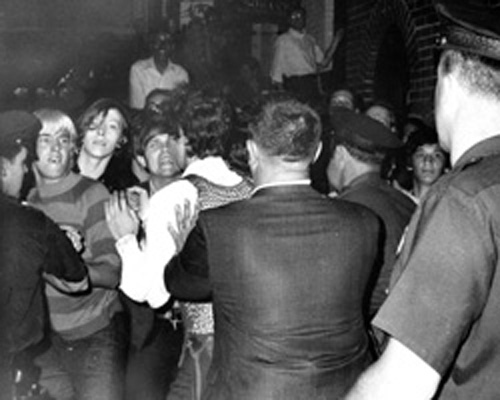
Sometime around 1am, when I was jumping up and down in time to a RuPaul song, getting beer spilled on the nice trousers I stupidly decided to wear, as three good Princeton boys faced off in the final round of the drag queen competition, I realized something that should have been glaringly obvious: this is precisely what I am fighting for. The right to be different, to my mind, is as gloriously essential as marriage rights or parenting rights or immigration rights or non-discrimination rights; de facto equality is as important, if not more important than, de jure equality. Celebration is tied right up in queer history with the fight for equal rights. You don’t have gay liberation without the Firehouse dances; you don’t have ’70s and ’80s New York without disco; you don’t have modern queer culture without Pride. And it is not irrelevant, either, that the first major event the brand-new Gay Alliance of Princeton sponsored in 1973 was a dance—on the top floor of New South, out of the way of a largely hostile institutional culture, close to Spelman and far from the Street. These dances were an annual occurrence for years, but it is no small thing that, 26 years since that first dance, a decidedly queer party can take place in an eating club. It doesn’t matter in the least that the club in question is Terrace—that drag can penetrate the Street at all is perfectly extraordinary, and evidence of how rapidly Princeton culture has changed since the early ’70s.

And so as I walked home Friday, after staying at drag ball far later than I’d told myself I would, after seeing most of my friends there, after laughing and dancing and having fun in a large group as I haven’t in some time, I told myself that there is no point in fighting if I cannot also celebrate what I am fighting for. What, then, am I fighting for? Well, I hope Congress passes the bills before it, and I hope state legislatures do as well. But more than that, I hope that every young person in America who wants to has the opportunity to go to a drag ball, or a queer dance, and to laugh and dance and shout the lyrics to RuPaul songs and be free. And I hope that every young person in America who already has the freedom to go to these events remembers that this freedom—like all others in the history of social justice and equality—has not been easily won.
The Washington Blade Shuts Down, and We Lose a Piece of History

I know that there are more important things going on in the world, news-wise, but I have to confess that I was pretty broken-up by yesterday’s news of the abrupt closure of the Washington Blade, among other gay papers owned by the same publishing company. The rest of the gay press has of course been mournfully sympathetic in its eulogies for one of the most important pieces of gay media history, but one of the best write-ups, I was pleasantly surprised to see, came from the Post, whose treatment of LGBT issues over the years has not been precisely sympathetic:

“It’s a shock. I’m almost speechless, really,” said Lou Chibbaro Jr., a Blade reporter who has written for the newspaper since 1976, covering the full arc of the country’s gay-rights movement, from early marches through the rise of AIDS and on to the latest battles over legalizing same-sex marriage.

The Blade, born in an era when most gays lived in the closet, grew in size and stature as Washington’s gay population blossomed and became more politically active and influential. Chibbaro, who wrote his first front-page story for the Blade under a pseudonym at a time when publicly stating one’s sexual orientation could be dangerous, felt the change in dramatic fashion this year, when, while covering a presidential news conference on health-care policy, he was directed to a seat in the front row.

The Blade’s closing comes at a moment of extraordinary optimism for many gays in Washington. The big story Chibbaro and the paper’s other writers have been covering is the bill supported by nearly all of the D.C. Council’s members that would legalize same-sex marriage in the city.

“Here we are, on the verge of having marriage equality, and it would be real shame if the Blade wasn’t there to cover the victory,” said Deacon Maccubbin, owner of Lambda Rising, the gay-oriented Dupont Circle bookstore, which had been advertising in the paper since the shop’s 1974 opening.

[…]

A small troupe of activists founded the Blade in 1969, a few months after New York City police raided the Stonewall Inn, a gay bar in Greenwich Village, igniting riots and launching the gay rights movement. In its infancy, the paper was known as the Gay Blade and consisted of a single, letter-size sheet of paper that its editor, Nancy Tucker, mimeographed and distributed herself, scooting around town in a Volkswagen to drop off stacks at gay-friendly bars. The paper’s mission was to unite an eclectic array of gay groups, including drag queens and government workers, literary buffs and motorcycle enthusiasts; inform readers of gay-related services; and warn them about blackmailers and other scammers.

In the ensuing decades, the Blade’s editors became more ambitious, switching to newsprint and dispatching reporters to write about discrimination against gays in the federal government, hate crimes such as the killing of Matthew Shepard in Wyoming, and political and health issues generated by the AIDS epidemic.

The article even quotes Frank Kameny as saying that the Blade “have become the voice of record for the gay community.”

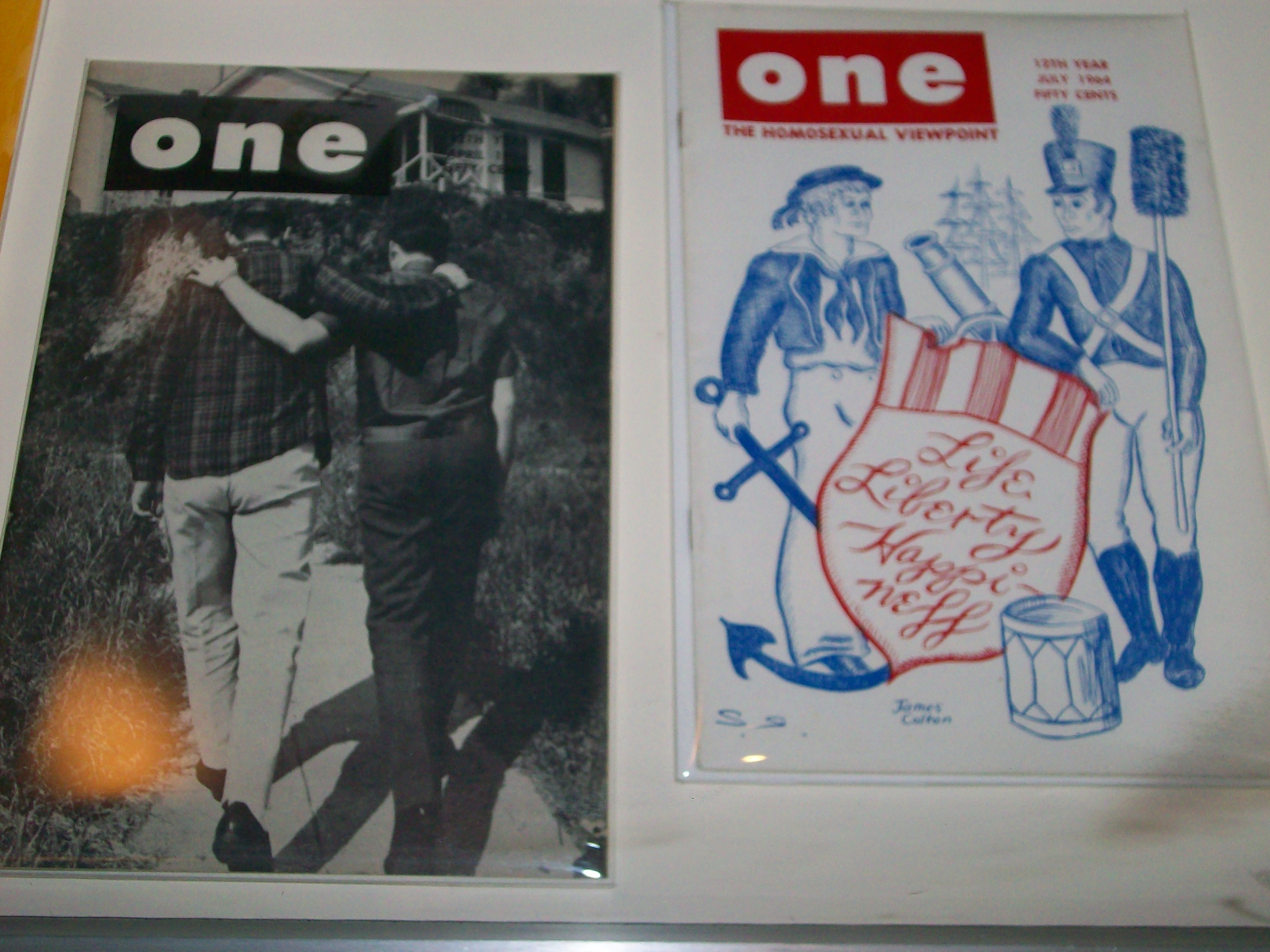
Believe it or not, the Post really gets it right: the gay press is part and parcel of gay history (I’m using the word “gay” intentionally here, for obvious historical reasons). If we are to date the modern gay rights movement back to before Stonewall, we would likely want to begin at the founding of One Magazine in 1952. It was the first gay publication founded by the first gay rights (“homophile”) organization, and it was seminal in establishing the idea that gay identity constituted not some private, internal psychopathology, but a community with a culture. One and its successors helped to spread and coalesce this idea that there was a group of people with shared goals and interests which were worth working to attain. They enabled the parallels between gay struggles and the struggles of other civil rights and social justice movements, and this in turn enabled Stonewall, the first Pride and gay rights parades, and the veritable phalanx of post-Stonewall gay papers. These included, of course, the Blade, but also half a dozen publications in New York and one for just about every other major city. These papers advertised the events of a marginalized and still largely closeted community. They printed the personal ads that couldn’t get printed in other publications. They, of course, reported on the news of hate crimes and police brutality that the mainstream media ignored. Come the 1980s, they were an essential venue of mobilization and organization and dissemination of information surrounding the outbreak of the AIDS crisis. The Blade in particular, by virtue of being based in Washington, was the paper of record of LGBT legislative struggles, reporting on the issues that still impact the community today—from the (eventual) federal response to AIDS through to the recently-passed landmark hate crimes legislation. These papers have recorded LGBT history, and they also are LGBT history.

Probably anyone reading this blog can recite a litany of the reasons the newspaper industry is dying. There are blogs and online editions of papers and myriad ways to access information without paying for it. Instead of paying to put ads and classifieds and personals in papers, people post to Craigslist or dating websites or place ads on websites. Newspapers are losing their revenue—and all these patterns impact what has become the LGBT community doubly. This is a community that is increasingly less ghettoized and more assimilated; what need has it for a particular venue for its ads and its news, when dating websites accept all sorts of advertisements (and dedicated gay dating websites also exist), or when the Post and the Times will cover the issues they once ignored? We no longer live in the era of the NYT’s notoriously poor AIDS coverage. Times have changed. And the Blade, tragically, has locked its offices and fired its staffers.

So maybe Bilerico and Pam’s House Blend and Towleroad—in collaboration, indeed, with the Times and the Post and, heaven help us, the Wall Street Journal—can fill in the hole left by the demise of the Blade and its peers. But how alienating it feels to know that we’re leaving the era when a marginalized community used its print media to band together and organize and share in its solidarity?

(cross-posted)

The Intricacies of Marriage Equality Legislative Politics

Instead of doing work for my anthropology class, I just got distracted by a certain NYT article, which led me to go on an article-long rant about the politics of marriage equality in New York and New Jersey. So much for trying to step back from politics before I have a heart attack or contract diagnosable depression….

You can read the post at my Campus Progress blog, and if you’re interested in staying informed about what’s going to happen in two populous and incredibly important states with regard to LGBT rights in the next couple months, you should really do so.

Oh, Washington Post, Do Please Try Harder

From this morning’s Post:

Questions about the largest contributor [to the anti-marriage equality campaign in Maine] have sparked an investigation by the state ethics commission and a court battle. The National Organization for Marriage, or NOM, has contributed $1.6 million to Stand for Marriage Maine but has declined to reveal its own contributors, despite a federal district court decision last week that it must do so under Maine law.

Some groups for gays say the organization is a stalking horse for the Church of Jesus Christ of Latter-day Saints, or the Mormons, which dominated fundraising in the California campaign. Many of the actors in a nationally televised ad produced by NOM, called “Gathering Storm,” turned out to be Mormon activists.

Weekend calls to the New Jersey-based organization and its attorney were not returned. But Fish said that after the backlash in California against the Mormon Church, its leadership decided not to become directly involved in Maine.

I’m surprised to see the Post pulling this, especially after running that rather silly and much-criticized article about Brian Brown, NOM’s executive director, over the summer. If there is any religious background to which NOM’s leaders subscribe, it’s Catholicism: Brown, President Maggie Gallagher, and Chairman of the Board Robert George all profess devout Catholicism. Indeed, to the best of my knowledge, the only Mormon in a leadership role at NOM is science-fiction writer Orson Scott Card, a recent addition to the Board of Directors who is probably not entirely sane. Making it out to seem as if marriage-equality proponents think NOM is a Mormon conspiracy isn’t entirely fair of the Post, because I think most of us know that’s not true. If we know anything, it’s that NOM is deeply embedded in the Catholic right, and that such is the tradition its leaders come from.

Moreover, I wish some mainstream news organization would get in touch with NOM and determine once and for all where they’re located. First the Post reports that NOM moved out of Princeton, to Philadelphia and then to DC, and now they’re telling us that NOM is still NJ-based. The website still lists a Nassau St. mailing address and a (609) phone number (that’s the Princeton area code), but even during business hours that phone number only ever goes to voicemail. What’s Brian Brown doing in his new H St. offices? How do we contact him there? No one—not even the Post—seems to know.

If the Post has contacts at NOM (and they must do, to have run that profile in August), they have the ability to do much more than make unsourced claims about what “some groups for gays” think. They could actually unravel the tangled web that is the Catholic right and figure out what the hell is going on here. I guess, seeing as this is the Post, that would be too much to ask, but at the very least the paper could stop sowing conspiracy theories about Mormons that I, as an LGBT activist, have never heard espoused by the people I work with.

(cross-posted)

Okay. Time for Me to Weigh In on the Kevin Jennings Saga.

Those of you who are tuned into either the queer press or the right-wing press might be aware of the right wing’s smear campaign against Obama’s nominee to be head of the Office of Safe and Drug-Free Schools, Kevin Jennings. To summarize briefly: Jennings is gay, he used to be head of GLSEN (which is a pro-safe schools, pro-GSA organization), and he’s written various things about the need to make public education more friendly to queer kids and to kids with queer parents—most famously, by now, the foreword to a book called Queering Elementary Education.

You know what this means, right? Yep, I bet you’re smart enough to put two and two together in right-wing-land: you can’t have the words “gay” and “school” in the same paragraph without invoking the specter of pedophilia. In their attacks against Jennings, the right-wing media have drawn absurdly untrue connections between Jennings and NAMBLA. They have criticized him for listening supportively to a closeted student who told Jennings that he’d had sex with a man he picked up in a bus station bathroom (the student was over the age of consent). Now, apparently, they’re criticizing him because he was involved in ACT-UP. And reader, that’s the last straw.

I know we’re not supposed to feed right-wing nonsense by reporting on it, and I know that I don’t need to tell you folks that Kevin Jennings is far better qualified to make our schools safer than any Bush administration appointee. I don’t need to tell you how nice it would have been to have an out gay teacher in high school, or the importance of students being able to confide in teachers, even if it’s about hooking up in bus stations. But when the right-wing press thinks they can get away with distorting the history I study so that they can erase queerfolk from public education, I’m sorry: I have to rant about it.

The Washington Times ran an editorial on Thursday (I’m not giving them the privilege of a link) which says, in the first paragraph, that Kevin Jennings is an inappropriate person to nominate to public office because he was a member of “the extremist homosexual organization ACT-UP.” It suggests that Jennings is too radical for the gay mainstream because he was in ACT-UP (which, as Alex at Bilerico points out, is just really stupid. ACT-UP was a dominant part of the gay community in the ’80s and early ’90s, and how could it not be? People were dying, and no one was paying attention). The editorial also draws a bizarre association between ACT-UP and NAMBLA, that surefire way to convince folks that all gay men are pedophiles. But this particular excerpt jumped out at me:

ACT UP fanatics invaded the MacNeil/Lehrer NewsHour studio in 1991 and chained themselves to Robert MacNeil’s desk during a live broadcast. Protesters carried signs declaring, “The AIDS Crisis is Not Over.”

Well, yeah. Because that’s true. It wasn’t over in 1991 and it’s not over now. And every time folks like the Washington Times pull something like this, it increases the burden on the rest of us to bear witness to the thousands of gay men who have died in the face of politicians and media figures trying desperately to use AIDS as proof of the immorality of homosexuality, getting some sort of high of self-righteousness out of human suffering. I want to say that I can’t believe that something which calls itself a news organization would have the temerity to criticize a political appointee for his work in the ’80s to stop people from dying, but frankly I’m not surprised. I’ve read enough about the ’80s themselves, and the reasons that ACT-UP formed in the first place, to know better.

The right-wing commentators have a habit of doing this, of distorting the righteous into something evil. It makes me so angry, and I find it very frustrating, because it draws attention away from what I should be doing as someone active in LGBT communities. It’s easy and satisfying to write a blog post like this one, or to bitch about Anscombe, or to get angry about the latest stupid thing Prof. George has said in the national political discourse (with regard to Kevin Jennings, he said, “Children don’t need to be learning about homosexual practices in elementary school.” And they gave this man tenure WHY? Evidence of reasoned thought this is not). But in the meantime, kids are still killing themselves because their school and home environments are so hostile and unsafe. In the meantime, you can be fired for being gay in thirty states; for being trans, in thirty-nine.

And, in the meantime, the Washington Times still think that pointing out that an Obama nominee was involved with ACT-UP is enough to scuttle the nomination. So let’s change hearts and minds, folks. Let’s educate and be here and queer so that America says to itself, “You know what? I’m proud of my president that he nominated someone who was involved with ACT-UP. I hope that, and the rest of Jennings’ past, means that he’ll be an unwavering advocate for queer children and the children of queer parents.” I mean, in a broad sense, that’s what ACT-UP was fighting for, right? The right to recognition and to legitimacy and to care.

I’m not sure how related this is, but this week, the president of the Anscombe Society was quoted in the Princeton alumni magazine as saying, rather hysterically, that advocates for gender-neutral housing want “to eliminate any gender-based considerations whatsoever, and legal embracing of all sexual lifestyles. It’s a piecemeal process, taking each bite out of traditional gender norms.”

Well, yeah. That’s the idea. Call me a radical, but I say, act up! Fight back! Civil rights—and recognition—now!

QOTD (2009-10-14)

Edmund White, in an interview with Salon, says one of my favorite things ever about same-sex marriage:

In the past, when gays were very flamboyant as drag queens or as leather queens or whatever, that just amused people. And most of the people that come and watch the gay Halloween parade, where all those excesses are on display, those are straight families, and they think it’s funny. But what people don’t think is so funny is when two middle-aged lawyers who are married to each other move in next door to you and your wife and they have adopted a Korean girl and they want to send her to school with your children and they want to socialize with you and share a drink over the backyard fence. That creeps people out, especially Christians. So, I don’t think gay marriage is a conservative issue. I think it’s a radical issue.

I adore White’s books for so many reasons, and I think the fact that I read five of them this summer has influenced a lot of my thoughts about the history of gay men these past few months. He’s got some wonderful prose, and he writes candidly about gay culture and being gay—that’s a strikingly rare combination, and a risky undertaking in a literary world that tends to ghettoize gay writers. The last few pages of The Beautiful Room Is Empty, in which he has this sort of dadaesque description of Stonewall, are some of the best writing I can think of, for example—not only is the prose just glittering in its surreality (I find it really difficult to describe why good prose is good; you’ll just have to take my word for it), it’s a great way of turning the conventional riotous watershed OMG-Judy-Garland-died-and-now-we-have-a-revolution-on-our-hands kind of narrative on its head.

The NYT reviews of White’s two memoirs, My Lives and now City Boy (I’m still waiting for my copy of City Boy to arrive from Amazon; I’ll report back when I read it) seem profoundly on edge about the frank discussion of sex that pervades them. I mean, this is the Times we’re talking about, so it’s not too surprising; the paper hasn’t always been the most with-it on gay stuff. But even I, who am utterly unshockable, remember looking awkwardly around to see if anyone on the bus was looking over my shoulder while I read what the Times facetiously calls “that S-and-M chapter” in My Lives. Even I was glad that, unlike a lot of other books I’ve read with a lot of sex in them, this one’s cover was discreet.

But I think we have to be profoundly thankful to White for writing literary books in which the narrator acknowledges his sexuality with at least the mannerisms of honesty (even if he’s applying creative license to what actually goes/went on in his head and his life). It’s an increasingly common thing, but it still takes a high degree of courage and literary acumen.

Oh yeah, and he teaches fiction at Princeton. What could be better?

Even Princeton; or, This Is What Democracy Looks Like!

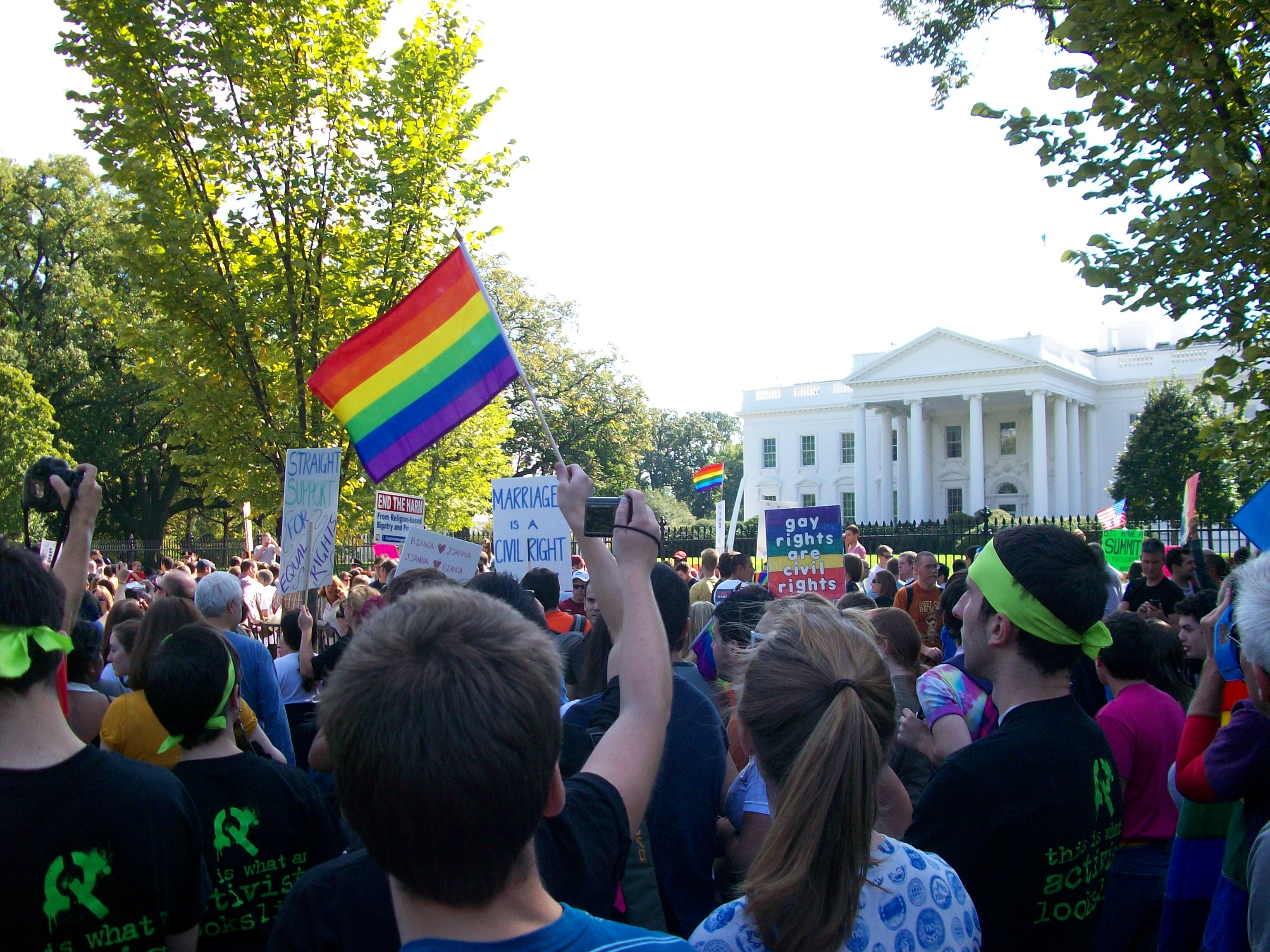
I have marched on the San Diego Hall of Justice and City Hall in Manhattan. I’ve protested in Princeton and at Scripps Ranch High School. Today, I marched on Washington. Today, like my mother before me and in the footsteps of a proud tradition of activists and organizers, I got in a van at 6:30am and drove down to Washington.

100_1212

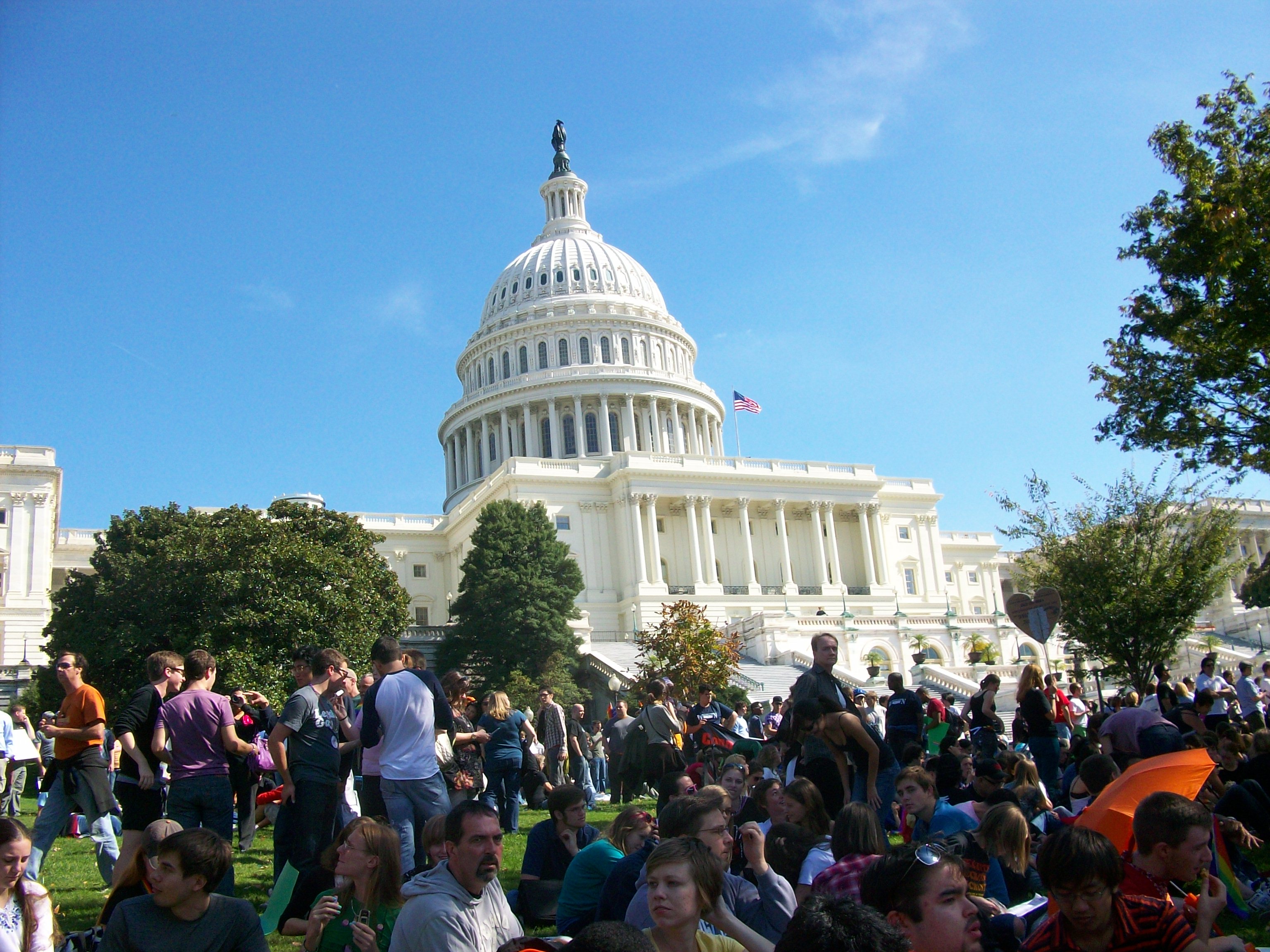
I marched. I chanted and shouted and cheered (I lost my voice). I cried, especially at the rally when Dan Choi spoke, when Staceyann Chin performed, and when Cleve Jones spoke. I cried most of all when the cast of Hair, who canceled a show to come to the march, sang “Let the Sunshine In.” Readers will perhaps be aware that no song is dearer to my heart than “Let the Sunshine In.” It represents all that is wonderful and all that is left unfulfilled with regard to the American promise. There was no way I could have heard it sung live on the steps of the US Capitol with rainbow flags flying everywhere and not have started to sob. I caught a couple minutes of video of the song, but all you can hear is my tired voice cracking as I try not to cry.

100_1234

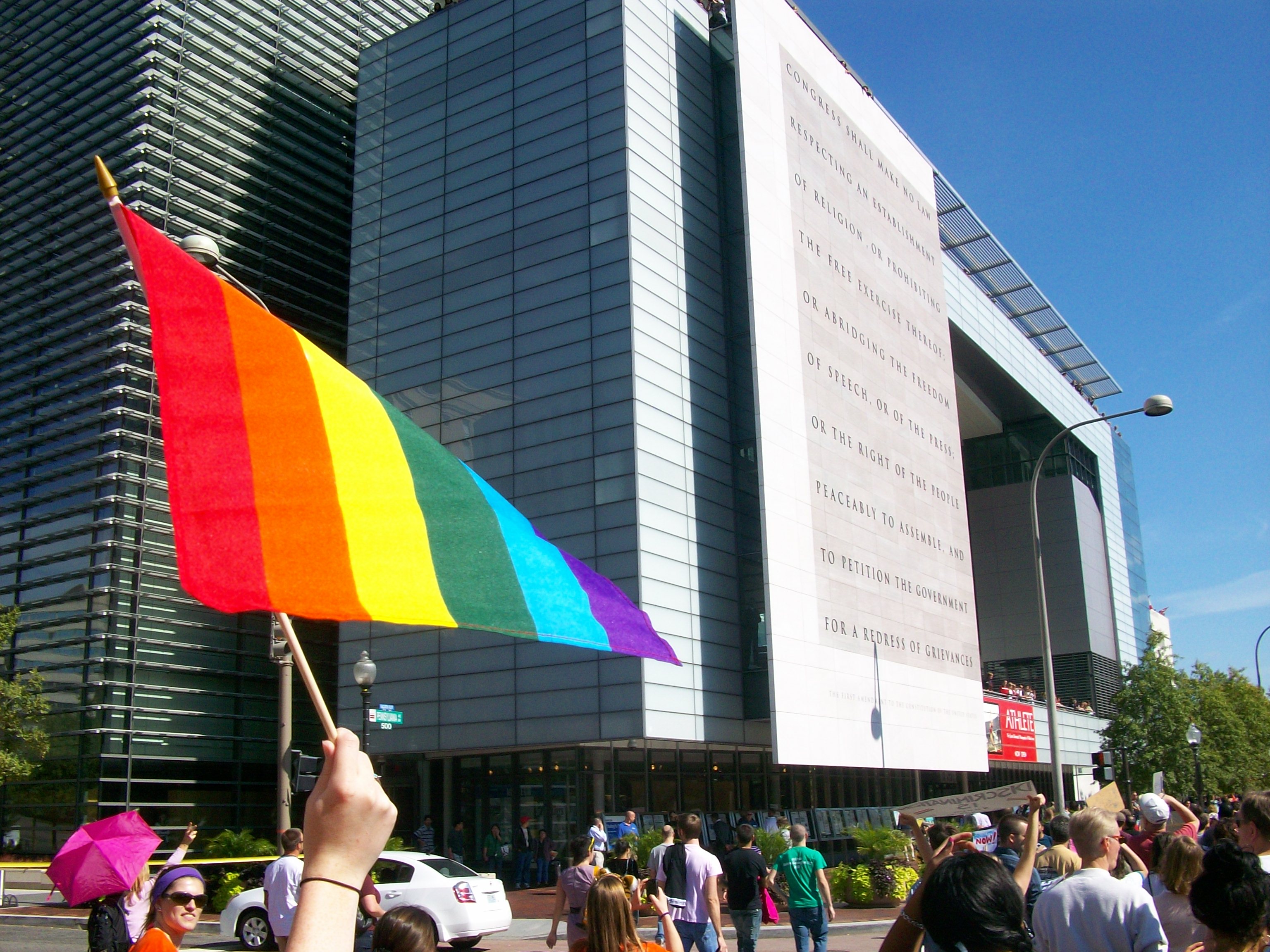
There is nothing so incredible when it comes to exercising your freedom of speech as marching past the White House, past federal buildings of all kinds, right up to the steps of the Capitol. There is nothing so incredible as marching in solidarity with your friends and your classmates, but also all the marchers around you. There is nothing so incredible as being able to get 70 people—many of them first-time marchers—from Point A to Point B, and realize that they, too, have loved every minute of it (thanks to EVERYONE, particularly the first-timers, for coming with us today!). There is nothing so incredible as someone coming up to your Princeton contingent to say “I graduated in ’05, and we would never have gotten together a group like this then.” Even in four years, things change. Just think where we’ll be only a few years from now.

100_1253

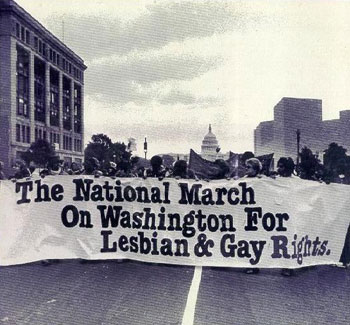
Some of the speakers at the rally referred to the activist legacy that brought us to the steps of the Capitol today. They referenced the civil rights March on Washington in 1963, and countless gay/LGBT rights marches. The invocation which began the rally called out not to God, but to the spirits of activists like Phyllis Lyon and Del Martin, Harry Hay, Frank Kameny, Harvey Milk, and many others. None of those people, in the time that they began their activism, could have brought 100,000 people to the steps of the Capitol to fight for LGBT civil rights. And yet without their struggles, that couldn’t have happened today.

100_1265

I came home tonight to two things: a tweet from a colleague-friend who proposed different means to the same or similar ends (in other words, Maine before marching), and a flyer from Princeton’s Anscombe Society, advertising their proposal for an Abstinence and Chastity Center on campus. In utterly different ways, both things questioned how I chose to spend my Sunday (and the past few weeks in planning for this Sunday). To my colleague-friend, I say that the fight for equality is not a zero-sum game; I’ve donated my time and my money to Maine even as I remain focused on making sure a contentious election in my own state works out. But doing so did not preclude me from marching today. As they say whenever we do these kind of things, we march for those who can’t—and so I marched today for second-class citizens not just in Maine, but all over America and all over the world. I marched for the people who are unable to come out or unable to travel; I marched—as one speaker at the rally said—for all the people who would have marched today had they not been lost to AIDS or to anti-LGBT brutality. As to Anscombe: I laughed when I saw the flyer that had fallen under my door; I wished I’d been able to tell the kid who dropped it so that I could tell him what a waste of a flyer it was. I wished I’d been able to make sure he knew how 70 kids at his university spent their Sunday.

100_1276

Tomorrow is National Coming Out Day, and my name will appear along with 600 others in an ad in the day’s honor in the Daily Princetonian. There is actually probably nothing more important in this struggle than coming out, and being brave enough to sign your name to something like this. But the old chant does go “Out of the closet and into the streets!” and I think the second clause is nearly as important as the first.

100_1275

(cross-posted)

The Winds of Change; or, What Do We Want? Equality! When Do We Want It? Now!

This is where our world stood 50 years ago:

homophiles

This is where our world stood 40 years ago:

stonewall_riots

30 years ago:

1979_march

And, today, though circumstances may have changed drastically since then, we’re going to do it again. The arc of history bends towards justice, but sometimes you just have to march.

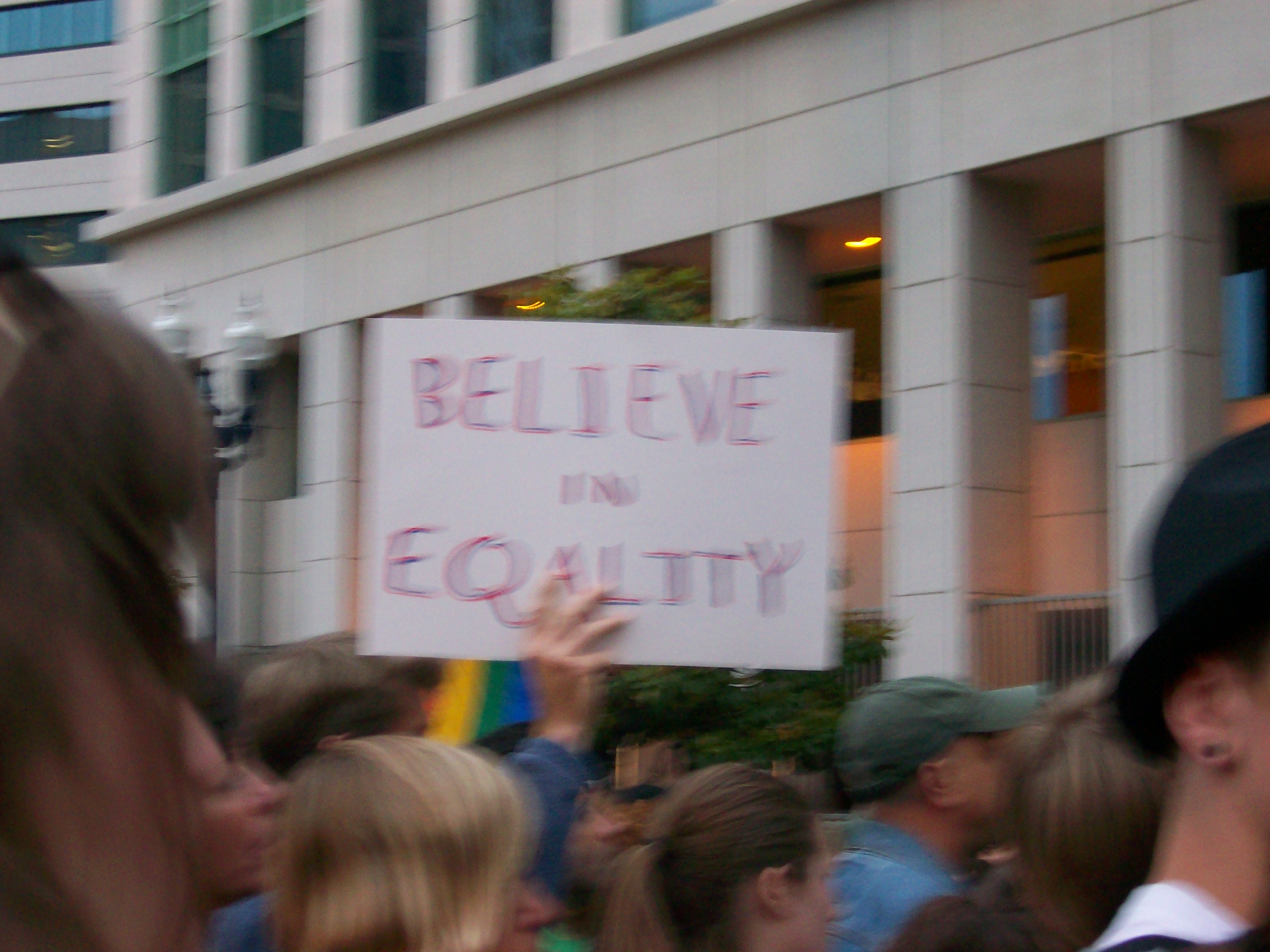
What do we want? Equality! When do we want it? NOW!

100_0501

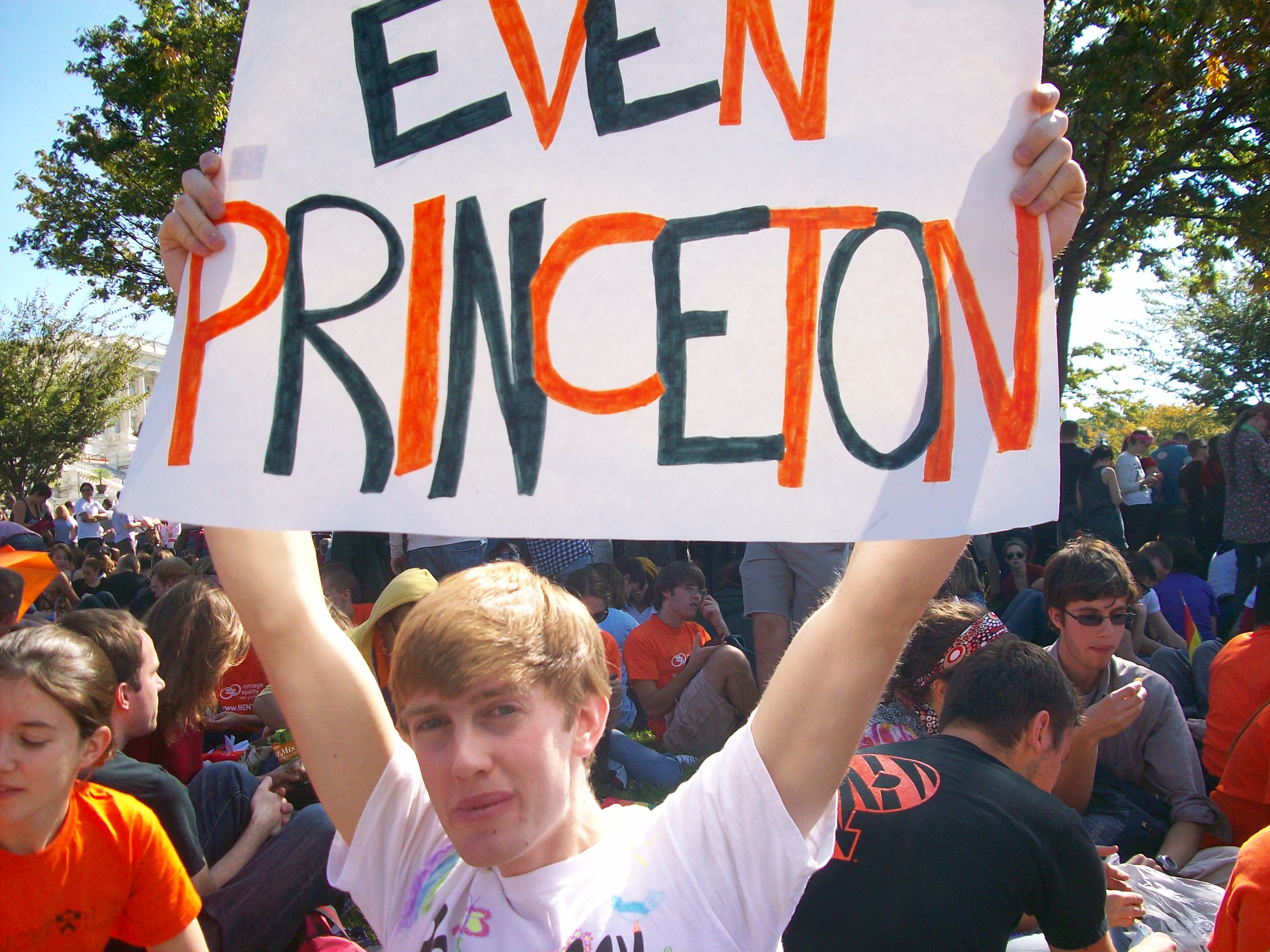
When I get home, I’ll post a picture of our “Even Princeton” sign, out in the streets of Washington.

Sometimes You Just Have to March

So I went for publicity over dignity and pitched an op-ed to the Daily Princetonian. To my pleasant surprise, they liked my pitch, the editing process was actually quite congenial, and I’m reasonably proud of the result. The article is about why the National Equality March happening in Washington on October 11 is a good thing for LGBT rights and a good thing for college students specifically:

Thanks to civil rights activists working long before any current Princeton undergraduate was born, it is possible for queer youth to live out and proud lives to an extent that it wasn’t 30 years ago. But as long as being LGBT means second-class citizenship, more progress must be made. Some change can be enacted through laws and policy proposals, but broader societal support for those laws and policy proposals is essential if they’re to be effective. And sometimes getting that support really does necessitate marching in the streets.

On Oct. 11, thousands of people who believe in civil rights for all will converge on Washington, D.C. They’re participants in a National Equality March, which will wind its way through downtown Washington and culminate in a rally at the Capitol. The march has one demand — “Equal protection in all matters governed by civil law in all 50 states, now” — with which it aims to transcend disagreements about which particular aspect of LGBT equality should be the first priority.

Read the rest here.

And then come to the march! There’s a group of us at Princeton getting together a bus to go down to DC, and if you’re a member of the university community who’d like a spot on that bus you should let us know.

In 1965, a group of Princeton students under the auspices of a campus SDS chapter participated in the national anti-Vietnam March on Washington. They carried a banner that read “Even Princeton.” I love this story, because it reminds me that however frustrating this campus climate may seem at times, there’s nothing to stop you from marching for justice and equality and freedom and civil liberties in the name of its students and in the name of students—and all people—everywhere. I’m going to make a sign to carry at the National Equality March that says “Even Princeton,” and I’m going to be proud to represent my community in DC.

(cross-posted)

On Knowing; or, the NYT Lends Itself to Yet Another Personal Rant

In a sentiment that is hardly unusual, some New York Times readers express surprise that their children and other teenagers they know could possibly have any knowledge of their sexual orientation at such a young age:

My question is about the Q (Questioning) subgroup of L.G.B.T.Q. Youth.

Surely most teens will be in this group at least until they experience a “full” sexual relationship with another person?

[…]

Teen years are so full of doubt and confusion about self and identity. Teens are suggestible, peer pull is strong as is the desire to forge an interesting and individual social identity for themselves.

My concern is for all those teenagers experiencing doubt and sometimes a lot of hidden angst and silent but very real suffering in a world which is incredibly difficult to navigate at their age.

“Don’t worry, they will know if they are gay” is a standard answer. This may be true for adults who have had some experience, but is it really true for many teenagers? It seems too simplistic and inadequate. Any guidance and thoughts would be much appreciated.

I’ve heard this before, of course—I came out for the first time at 14, and over the past few years I’ve heard this many times. I mean, now I’m old enough and enough of a professional queer that folks don’t question the labels I assign myself or allow to be assigned to myself perhaps even as much as they should. But back in early high school, I heard things like this a lot. “You’re too young to know.” “Most teenagers go through a phase of same-sex attraction.” “You’ve never had a relationship.” Well, yes, the last two things were true. But facts B and C do not imply fact A. I don’t see, given the structure of our society, how you can possibly be too young to know.

Our society is very, very clear on what constitutes a normal or normative sexuality. I’m not too long out of high school, and I have friends and a sibling who are still there. I know that when teenagers ask each other “So… who do you like?” they expect you to answer with an opposite-sex name. I know that it is not easy to ask, and then take, a same-sex date to the school dance. I know that there is pressure after pressure, be they from students or parents or teachers or general cultural forces, to define heterosexuality as normal and all other sexualities as abnormal.

And so when you’re different, you know. Believe me. You see it if there is something powerfully and fundamentally (if amorphously) different about the way you interact with people both of the gender to whom you’re supposed to be interacted and the one to whom you’re not. You see it if there is something different about the way you understand and express your own gender. To teenagers, that line is very clear. You know if you’re not like your peers, just like you know when you don’t have the same stuff they do or talk the same way they do or have the same cultural values they do. The lines of difference are very strong in adolescent culture, as are the undercurrents of sexuality. If anything, it is more obvious that your understanding of sexuality is different from your peers, than any other contrast.

Literature shows us this, of course. I’ve read many memoirs—from men, mostly, because that’s what I read, but also because of how adolescent male sexuality is less repressed than and also homoerotic in a different way from female sexuality—in which the writers all say that they knew their queerness from the instant puberty set in. And even if they didn’t know any gay people, or if they were growing up before “gay” became a thing that you could be, they knew there was something different, something strange that made them not like their peers. It’s an undeniable fact of this entire genre, that you start in adolescence with this vague sense of not-belonging and go from there.

I’ve tried on many labels in the past five years. I’ve gone through bisexual and gay and queer and asexual and I don’t know what else. But it’s always been “different” and “other.” And sure, I envy anyone who can make it through adolescence without squirming in desperate confusion when yet another crowd at a lunch table or a birthday party asks, “So… who do you like?” But when you don’t know how to answer that question, or you fear to answer it honestly, you at least know, as I did. And you begin to construct an identity based on that knowledge, however old you are and however much sexual experience you’ve had.

(cross-posted)