Gay Greats: Questions of Canonicity; or, In Which I Am a Fuddy-Duddy

As an undergraduate in the heady atmosphere of mid-19th-century Oxford, John Addington Symonds studied something called “Literae humaniores,” or “Greats.” It was a curriculum of what we might today call western civ (indeed, Columbia still calls its western civ core curriculum “Lit. Hum.”): mostly classics, Greek and Latin literature and history, with some modern philosophy and ethics thrown in. It was the first secular course introduced to Oxford, a curriculum that, especially in Benjamin Jowett’s Balliol, hoped to prepare successful graduates to govern the empire. It prepared Symonds, recipient of one of the highest Firsts in his year and a variety of very prestigious university prizes, to write a sweepingly comprehensive cultural history of the Italian Renaissance, and then to formulate what I argue was the first academic theory of homosexual identity. It was a rigorous curriculum, and a curriculum that defined the education of individuals from Symonds (and Pater, Swinburne, Wilde, etc.) right down to some of my friends in Oxford today. Greats has changed from its 19th-century incarnation: a lot of knowledge has been added to classics and philosophy in the past 150 years; Oxford no longer (universally) wants its graduates to govern the empire or enter the clergy; and its students are no longer (universally) public-schoolboys who have been drilled relentlessly in Greek and Latin grammar from the age of seven onwards. But one of the facts that bowled me over when I was at Oxford—and that did much to sum up what was strange and otherworldly about that city of dreaming spires—is that I actually hung out with people who studied the same stuff Symonds did. Time moves slowly in Oxford. It’s conservative. It cares about canon.

Anyone with an inkling of a 21st-century liberal-arts education will have been trained to read that preceding paragraph for all the old-boyism, all the white male upper-class privilege, Greats enshrines. It’s the old wrinkled center of what Oxford is: academic conservatism all the way down. And yet, puzzlingly, I was well and truly seduced by that strange fairy city. Like Sue says in Jude the Obscure, Jude, and indeed, I, think “it is a great centre of high and fearless thought, instead of what it is, a nest of commonplace schoolmasters whose characteristic is timid obsequiousness to tradition.” And thus I sit here in my annual August exile far away in rural British Columbia: organizing my Symonds research, listening to my Oxford playlist, and throbbing with a dull ache of love for a city that is about nothing so much as it is about canon, about doing things because that is the way they have always been done.

The thing is, I grew up with canon. I was raised in the western humanist tradition, with Great Books and dead languages. I come from a family who decided it would be a fun bonding activity one Thanksgiving to read Paradise Lost out loud together, and my parents feared for my safety when I climbed on top of the toy car to recite monologues from Macbeth. Growing up, my favorite page in the Cambridge Encyclopedia of Language was the one that illustrated the Indo-European language family by listing the Lord’s Prayer in a variety of Indo-European languages. Growing up, I had a favorite page in the Cambridge Encyclopedia of Language. I read Victorian novels because as a Victorianist, it’s my job, but also because, if you were raised in the western humanist tradition, that’s what you do. I was raised to think—despite everything that I know about the privilege the western civ narrative enjoys, and how problematic that is—that someone needs to study these books, to remember them, to cherish them (I keep telling people I’m really quite conservative, and no one believes me… well, guys, here’s the proof). And I was raised to follow my intellectual passions, so I have guiltily burrowed my way deep inside some American child’s version of Arnoldian Culture, and wormed my way out the other end only to find myself an adult writing a thesis about John Addington Symonds.

What I’m doing with Symonds doesn’t necessarily bespeak “Greats” on the face of it. I’m writing about the construction of male homosexuality, engaged enough with the world of queer theory to know that I am making an intercession into the scholarly literature by challenging the Foucauldian presumption that only regulating entities were interested in defining homosexuality, rather than just going with the flow. I know that this is something professional historians are interested in these days. I’m happy to get bogged down in deconstructive wordplay as much as the next person with a smattering of lit-crit background. But at the same time, this isn’t a project in gender studies or queer theory, as much as I respect those fields and the people who work in them. It’s a project for which I’ve started to learn Greek and dusted off my Latin. It’s a project that’s involved teaching myself Greek literature, Renaissance art, Victorian politics and culture, Anglo-American utopian socialist literature, and generally trying to get inside the mind of an Oxford-educated Victorian man of letters and to see the world through his eyes. I am trying to figure out why Symonds was as a young man unable to find words to express “l’amour de l’impossible,” and why later in his life he found those words and set out on a crusade to spread them, by understanding what he thought was important—and why his narrative of what homosexual identity is encompassed Plato and Michelangelo and Walt Whitman.

I’m doing this in part because I was already at least halfway there myself. I work easily within this kind of cultural narrative. Recently, I realized that although in my academic work I try to be distanced and critical and deconstruct my own narratives, what I call “the homoerotic literary tradition” is really just “gay Greats.” This idea that stretches throughout the late 19th, 20th, and now the 21st centuries of privileged white gay men finding out who they are through reading is nothing more than a recasting of the western canon, looking at the same core curriculum through, er, lavender-colored glasses. And if you like, the Wizard of Oz allusion there is even deliberate: now the gay canon extends on its own path from the gay liberation era onwards, encompassing modern literary figures reclaimed and the new phenomenon of cultural figures who are openly gay from the start of their careers; a musical narrative in which Lady Gaga is the heir to ’70s disco; gay places and gay spaces; and increased points of contact between the stereotypical gay male culture and the other multivalent queer cultures that now challenge and undermine its hegemony.

I have been wondering more or less since I became involved in queer politics, culture, and history about issues of canon and hegemonic cultural narratives: does it matter that many young queer people have never heard of or read anything by Oscar Wilde? do gay people have to support same-sex marriage? are allies allowed into gay parties? to what extent is Lady Gaga’s “Born This Way” a problematic song? Making the queer-theoretical move of disengaging a homosexual sexual orientation that is in some sense intrinsic to one’s biology and/or psychology from a gay culture that treats these very specific cultural flashpoints as shibboleths solves some of the problems but not all of them. For me, my recourse to the gay canon as a woman—even as a woman scholar—is a fraught issue; that isn’t even the tip of the iceberg of identity-politics questions about who has access to this narrative and whom it speaks to.

But I think it can help us if we treat this canon like we do the old Greats curriculum, or American western civ à la the Columbia or Chicago core curricula. Greats is one path of study among many at Oxford; Columbia and Chicago are two universities among many with different approaches to the idea of liberal-arts education. (C.f. Princeton, which offers an optional rigorous first-year western civ sequence, an option availed of by only a few freshmen exceptionally passionate about the concept.) And so is gay Greats only one route among many to a sense of self-worth and self-understanding. We all make our own cultural compasses.

But as something of an expert about this canon, I do have a couple caveats. At risk of sounding like the conservative elite that I am, I think we should respect this tradition, even if at a distance, for the breathtaking goodness it has done for those to whom it speaks. We need to destabilize its hegemony, yes, but that doesn’t mean disavowing the fact that a litany of lives have been saved by Plato’s Symposium. (And people repurpose the canon in unconventional ways: the avant-garde musical Hedwig and the Angry Inch, whose protagonist exhibits an ambivalent and complicated relationship to gender and to privilege, borrows the creation myth that Aristophanes relates in the Symposium, of two-person people cut in half by Zeus, as the show’s central motif.) I also think that the need to respect this tradition for what it is means that if you are going to do it, you should do it right. You don’t have to speak about Oscar Wilde as one of your heroes to be a member of the club. But if you are going to plant your lipsticked lips on his tomb in Père Lachaise, you should learn a little about his life and read Dorian Gray and some of his plays and essays. If you are going to play gay anthems in your bar, you should know what the lyrics are, and what meanings lie behind the messages-of-self-empowerment-set-to-disco-beats of the moment (or of yesteryear). We are fortunate today that there are many ways to be queer, and that many people don’t even feel the need to label their sexual identities at all. But while getting a degree in non-western area studies and shaking free of the expectation to care about dead white men is totally awesome, that doesn’t mean it’s right to actually misquote Shakespeare.

Canons are constructs. Symonds, who didn’t think his feelings for men were precisely sexual until he was in middle age, and who struggled in his later work theorizing about homosexual identities and communities to pinpoint a difference between “congenital” and “acquired sexual inversion,” could certainly have told you that “Born This Way” we aren’t. But I, for one, am still in guilty shamefaced love with Oxford, “timid obsequiousness to tradition” and all. After all (and here’s where the conservatism comes in again) you know what doesn’t crumble into dust at the slight prod of a deconstructive finger? “The best moments in reading are when you come across something—a thought, a feeling, a way of looking at things—that you’d thought special, particular, to you; and here it is, set down by someone else, a person you’ve never met—maybe even someone long-dead. And it’s as if a hand has come out and taken yours.”
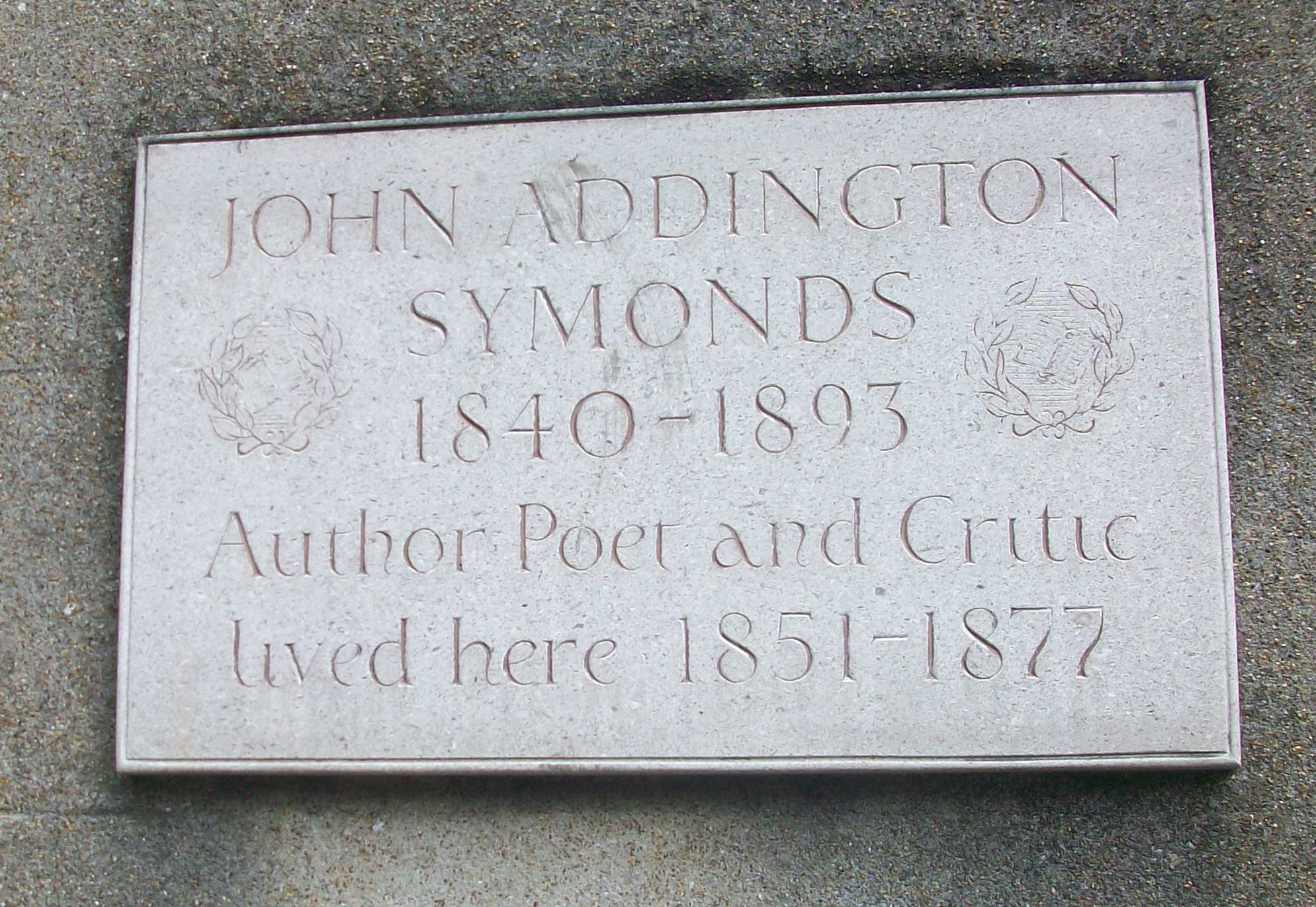
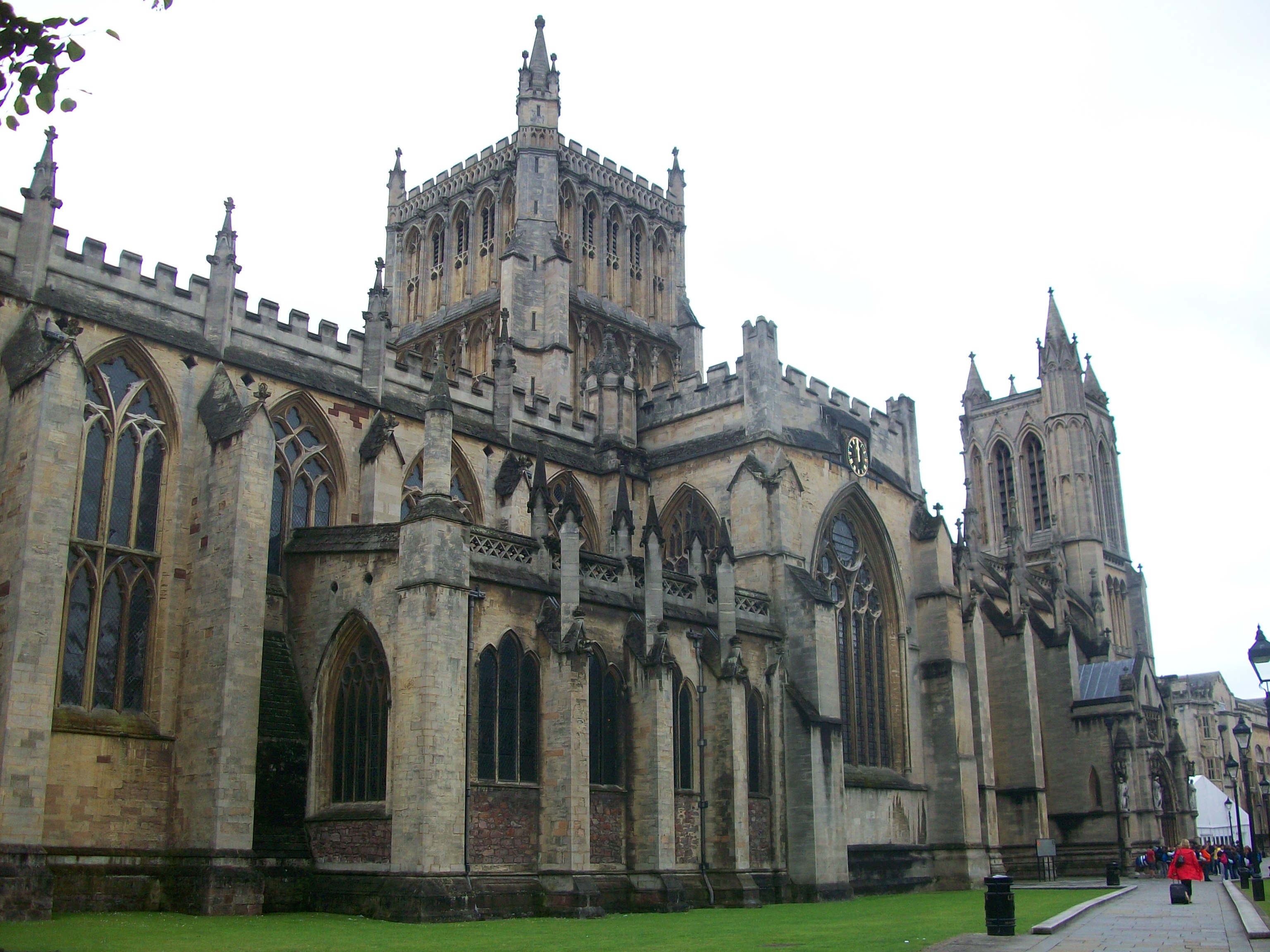
QOTD (2011-08-02)

Walt Whitman removed this verse from later editions of his “Calamus” cycle, but here it is, as it appeared in the first, 1860 edition:

Long I thought that knowledge alone would suffice me—O if I could but obtain knowledge!
Then my lands engrossed me—Lands of the prairies, Ohio’s land, the southern savannas, engrossed me—For them I would live—I would be their orator;
Then I met the examples of old and new heroes—I heard of warriors, sailors, and all dauntless persons—And it seemed to me that I too had it in me to be as dauntless as any—and would be so;
And then, to enclose all, it came to me to strike up the songs of the New World—And then I believed my life must be spent in singing;
But now take notice, land of the prairies, land of the south savannas, Ohio’s land,
Take notice, you Kanuck woods—and you Lake Huron—and all that with you roll toward Niagara—and you Niagara also,
And you, Californian mountains—That you each and all find somebody else to be your singer of songs,
For I can be your singer of songs no longer—One who loves me is jealous of me, and withdraws me from all but love,
With the rest I dispense—I sever from what I thought would suffice me, for it does not—it is now empty and tasteless to me,
I heed knowledge, and the grandeur of The States, and the example of heroes, no more,
I am indifferent to my own songs—I will go with him I love,
It is to be enough for us that we are together—We never separate again.

Symonds first heard of Whitman when he went to visit FWH Myers (ODNB) in Cambridge in 1865. The two were sitting in Myers’ rooms at Trinity, and Myers read this verse aloud to Symonds. That moment changed the life of the 22-year-old budding scholar, who much later would write that, “had it not been for the contact of his fervent spirit with my own, the pyre ready to be lighted, the combustible materials of modern thought awaiting the touch of the fire- bringer, might never have leapt up into the flame of lifelong faith and consolation.”

Reading this poem again, it’s really not hard to see why.

l’amour de l’impossible; or, In Which a Sermon Is Attempted

What is a utopia?

When we ask such definitional questions, we often find ourselves starting with a definition. From the Greek, a ου-τοπος is literally a “no-place,” and it is a concept that has been deployed by countless writers and thinkers since Thomas More to describe places, ideas, societies, and conditions that are not. Utopias can be bad or good or morally ambiguous; however, they are often constructed in order to describe what could be, or what one wishes could be. They tend to be worlds in which people get on rather more harmoniously than they do in our own.

For John Addington Symonds, utopia was a world where l’amour de l’impossible was possible. It was a world where human relations were stretched into new permutations, and where the morality that governs such human relations could be bent ever so slightly to accommodate “an intense, jealous, throbbing, sensitive, expectant love of man for man.” Symonds described his impossible love in this way in an 1889 letter to Walt Whitman, and it was Whitman whose own utopic hymn to “the new City of Friends” did so much to shape Symonds’ sense of what could be. In his Memoirs, Symonds wrote that L’amour de l’impossible est la maladie de l’âme (the illness of the soul); in the margins of Whitman’s “Calamus,” he wrote that “Comradeship is… a need of the soul”—medicine for the illness. Through Whitman’s gospel above all else, Symonds kept alive his faith in the achievability of this new world where something crudely degenerate could be exalted, and where Symonds himself could find peace and satisfaction.

What is a utopia? That is one utopia: one where the word “love” is transfigured, and where sexual satisfaction may be glorified. And as Symonds found himself shaping it in his mind, he also found himself beset by doubt in the promise of a different utopia, the one promised by the devout, God-fearing, Low-Church tradition in which he was raised, in which the Kingdom of God awaited the good. Aside from a few exceptions—such as when his eldest daughter died—Symonds had by his late twenties largely moved away from the Christianity that dominated his youth. He fell into its familiar rhetorical strides when writing his sister or his aunt a Christmas letter, and he remained an active patron of the English Church at Davos, Switzerland, where he spent the last fifteen years of his life. But it was in large part a habitual, cultural Christianity: after his undergraduate years, he did not write rapturously of epiphanies achieved while kneeling in chapels—nor even of choristers loved. In Symonds’ adulthood, as alternative gospels assumed priority in his worldview, even his sites of sexual attraction shifted from cathedrals to the secular spaces of schoolrooms, Swiss mountain slopes, and the banks of the Serpentine, as he proposed to live rather more pantheistically in “the Whole, the Good, and the Beautiful.”

But on the last day in July, 153 years after Symonds’ first date (if we may be so presentist to call it that) in the cloister of Bristol Cathedral, a rather old-fashioned sermon was preached in that self-same house of worship about poverty and humility and the Kingdom of God. It ended on R.S. Thomas’s oft-quoted-in-sermons poem “The Kingdom”:

It’s a long way off but inside it
There are quite different things going on:
Festivals at which the poor man
Is king and the consumptive is
Healed; mirrors in which the blind look
At themselves and love looks at them
Back; and industry is for mending
The bent bones and the minds fractured
By life. It’s a long way off, but to get
There takes no time and admission
Is free, if you purge yourself
Of desire, and present yourself with
Your need only and the simple offering
Of your faith, green as a leaf.

What is a utopia? Well, Thomas here offers us another one: the Kingdom of God, where admission is by faith alone, where the good are rewarded with more goodness, where no one covets either riches or each other. And this is the sticking point: a Doubting Symonds Scholar may find herself looking up at the pulpit and thinking, it’s no wonder that a man striving for a world where there are more ways to love and to be loved ceased to seek solace in those men who proposed to speak in the name of the Father, Son, and Holy Ghost. The love of God as delimited by such men can only go so far, then: pantheist and pagan, Symonds may have preferred Zeus, who at least had Ganymede going for him, than the Christian God.

But I think there is also more in the Thomas poem than meets the eye: for it is also promised us that in the Kingdom of God, “the consumptive is/Healed.” When I heard the preacher read this line out, I found myself hearing it as if “The Consumptive” was capitalized, as if it referred to one particular Consumptive: one particular member of this cathedral’s very diocese whose consumption led him away from England and away from its Church. It is a common trope in literature that the homosexual man is wasting away, and I don’t just mean from AIDS: the perceived moral degeneracy of his condition is figured in the metaphorical terms of a chronic illness. So it often seems with the real-life ill health of Symonds, whose consumption was assuredly compounded by the depression and anxiety visited upon him by the impossibilité of his amour. If Symonds were to be healed, it would not only mean restoring his lungs to their former robustness, but also transplanting him into a utopia where love of any kind is not a maladie.

The incredible, awe-inspiring thing about Symonds is that by the end of his too-short life he knew where to find this utopia, how to make it. He knew to look in Whitman, and in others who wrote in transcendent terms, like Goethe; in the newest advances of science, of evolution and psychology; in a canon of writers including Plato and Michelangelo and in the homoerotic, Hellenistic spirit they conveyed; and, yes, in the Hebraic spirit too. For despite all his very deep doubt, despite the clearness to him that the modern Christian world would not admit the possibility of his love (to the detriment of his and others’ mental health), Symonds never really left the faith into which he was born. To read his poetry, into which his tortured, impossible longings are intensely and intently sublimated, is to read, alongside dense references to classical mythology, a constant refrain of trinitarian imagery, and to hear the deliberate echoes of poets who negotiated the boundaries of Christian faith and reason, like Petrarch and Milton. I don’t think these are just the unconscious effects of being steeped in a Christian culture. As he did in so many other instances, I think Symonds is again working as hard as he can to stretch the fabric of the culture just wide enough to let l’amour de l’impossible slip in, allowing Platonic love to nestle neatly alongside Dantesque chivalric love. The Whole, the Good, and the Beautiful were Symonds’ Father, Son, and Holy Ghost—and he too, through the deployment of a doctrine of love, wanted to make utopia here on Earth.

To a devout Christian, Symonds, and indeed I writing (preaching?) here, have stretched and bent and twisted the paradigms and doctrines of Christianity beyond all recognition. In church, there is a line of metaphor and symbolism beyond which the language does not go (and this is why, out of all the bits and pieces of a given Anglican service, the one I the non-Christian do not say is the Creed). There is only so much one can do to bend before the framework shatters and falls to the ground. And yet I do not believe that Symonds thought he had done this, and here is the rub. For Symonds knew better than I that Jesus told His disciples to “Love one another,” and at the end of the day Symonds was all about love. Though he spoke as passionately as perhaps anyone has ever done about the need to repeal the Labouchere Amendment and decriminalize “gross indecency between males,” it was not so much in a literal sense, so that men would be free to have sex with each other. Rather, it was in a spiritual sense—as he wrote in his appendix to Sexual Inversion, it was so that men’s souls might not be destroyed as he felt his had been by the pressures of the double life. He was all about homosexual rights for the sake of making the double life whole—and good, and beautiful—and for the sake of letting us love one another.

And so here we come to the point in the sermon when the preacher, who has rambled incoherently about a few texts for a few minutes, tries desperately to leave her parishioners with the impression that she has half a brain and can tie all the threads together. We ask, again: what is a utopia?

Drawing my answer not from the Bible—or at least, not only from the Bible—but rather from the humanist (what Philip Pullman, lo these many months ago, called the pagan) tradition, I can answer that a utopia is a land where there are many roads to goodness and to love. It is a land where we all toil alongside each other on the uphill climbs towards our own Celestial Cities, each person seeking the best of all possible paths (for this is, after all, utopia), the one that will best help her to make her life whole. It is a land where as well as loving one another we learn from each other, and we feel free to share with each other whatever we hope will help us to stretch the fabric and patch the holes of the belief systems that help us to wake up in the morning and to go to sleep at night having done something worthwhile with the day. It is a land where the impossible is possible, and where pagan humanist Doubting Symonds Scholars find themselves in church on Sundays, hearing (and perhaps even offering a few) prayers to the Christian God.

QOTD (2011-07-22)

Found amidst the manuscript of Symonds’ Walt Whitman: A Study, in his hand:

Advice to a young man on the method of Reading. 1) A real love of knowledge, curiosity to examine thoughts and approach persons through books, is indispensable. 2) Submit to the author, get inside him by sympathy. Then return to criticize in detail. 3) Read with pencil in hand, jot down striking things and thoughts, trace argument in skeleton. 4) Write out abstracts or critiques of books read. 5) Or at least keep a list of books read. 6) Study over and over again one or two classics. 7) Exchange thoughts on what you read with persons engaged in the same pursuits, if possible of a different complexion of mind from your own.

I don’t have any context for it—I don’t even know whether it’s Symonds’ own advice or whether he copied it from somewhere else—but it’s delightful all the same.

Adventures in the Archives; or, In Which Professional Homosexuality Takes a New Turn

The Beat poet Allen Ginsberg (a particular interest of mine back when I was a teenage sexologist) was always delighted to lay claim to a rather queer familial lineage: he’d slept with his much-adored mostly-straight friend Neal Cassady, who had slept with a man named Gavin Arthur (a grandson of the U.S. President Chester Arthur—J.N. Katz has more about him in Love Stories), who had slept—or, rather, cuddled—with the great and good Gray Poet, Walt Whitman himself. Ginsberg, who saw himself as a poetic heir to Whitman, also saw himself as connected to his idol through the exchange of bodily fluids down the generations. He did the thing that many queer people have done and do, creating a family tree for himself despite the impossibility, in his era, of having a family of his own. And he also thereby connected sexuality and literature, intertwining sexual exchange with a canon of sexual free expression (both men’s vision was comprehensive enough to transcend the narrow band of “homosexual” or “gay,” if such an identity had even existed in Whitman’s time as it did in Ginsberg’s).

I’ve been fascinated for a long time by that story. I love the idea of making sense of yourself and your life and work by crafting a longue-durée narrative into which you can be seamlessly woven. It makes up for not being able to fit yourself into the world in your own time. It’s a different way of thinking about past and present, about similarity and difference, and it’s also the work of historical processes and historical scholarship, writ small.

It’s no surprise, therefore, that in my work on Symonds I have come to focus on Symonds’ role in how middle-class Anglo-American gay male culture creates a way to talk about itself and with that discourse a canon: high-cultural and low-cultural points of reference that provide evidence for the new ways of explaining homosexual identity and that self-identified homosexual men are expected to know. Many of the turn-of-the-century figures who anchor the gay male literary canon are connected by Symonds; some trace their own ways of thinking about homosexual identity directly back to his.

For those who did so, Whitman would therefore have assumed great importance. Though Whitman objected strenuously to Symonds’ appropriation of his universal cosmology as a way to talk about a very particular group of people with a very particular set of desires, he was arguably the biggest influence in Symonds’ eventual self-identification as an Urning, invert, and homosexual. Symonds wrote a lot about Whitman, in all literary forms: from private letters to his closest confidantes, to kind of terrible poetry inspired by him circulated among the same confidantes, to pamphlets circulated to small groups of men sympathetic to dangerous discussions about theories of sexuality, to popular reviews and criticism in the mainstream Victorian press—including a short book called Walt Whitman: A Study—in which the homoerotic subtext to Symonds’ rhapsodizing went unnoticed by all but a few readers. Whitman anchored not only Symonds’ sexual identity, but his sense of himself as a writer and as a human being, and his ideas about where the world was headed. Like Ginsberg, when Symonds speaks about Whitman it’s in mystical, mythological terms: Whitman is a prophet of a new world order, the bearer of a promise that there can be a world where the “love of comrades” is possible.

Today, I spent eight hours in a cluttered, windowless reading room air-conditioned to 18 degrees Celsius in the basement of the University of Bristol Arts and Sciences Library. Towards the end of the afternoon, I submitted a call slip for DM 1254/A400e, an entry listed in the finding aid as “Notes on Leaves of Grass in Walt Whitman Leaves of Grass 1884.” When the archivist reappeared five minutes later with a richly leather-bound volume bearing Symonds’ recognizable bookplate, my stomach flip-flopped, and I could barely keep my voice steady as I cheerily told the archivist I was on the lookout for marginalia. She wasn’t optimistic: “I think there’s a few underlinings.” In the first several pages—”Overtures,” “Starting from Paumanok”—she was right. But as I made my way through “Song of Myself,” the underlining got more frequent, and more excited and involved: there were double and triple outlines, crosses in the margins, all kinds of different ways of registering emotional response to text through pencil markings. And then, well—skipping over the ten missing pages of “Children of Adam” (a frequent target of censorship in the period because of its man-and-woman sexual explicitness)—I came to Calamus. And I caught my breath. And my stomach flip-flopped again. Because there, scribbled all over the pages, covering the margins and the gaps between the stanzas, was Symonds’ so-familiar hand. Not saying anything new, or brilliant, or controversial, or anything that conceptually is absent from his copious writing on Whitman, but words that show him reading the text: summarizing, marking things he doesn’t understand, keeping track of the narrative that the sequence of poems subtly develops, and, importantly, demonstrating evidence of his rather radical reinterpretation of Calamus, and how in his hands the poems took on a life of their own, and came to mean homosexuality in a way they never did in Whitman’s. If I hadn’t been in the reading room—and if I hadn’t been holding an incredibly valuable (and to me priceless) book, I would have cried tears of joy.

I do not live the kind of life that would enable me to craft the kind of sex-partnered lineage Ginsberg did, nor do I have any desire to do so. I am not a Beat poet—I am a historian. I am not a gay man—I try, as faithfully as I can, to tell their culture’s stories. Today I held a book that Symonds not only owned, but wrote in, invested with all the emotional intensity that an incredibly emotionally intense man could muster. If I can say this without doing anything to denigrate or discard those who prefer a lineage of physical contact, I think I am quite happy to be someone who knows the people around which I have built my intellectual world through a lens of intellectual history, in which marginalia have all the cathartic power of an orgasm.

We all make our own cultural compasses. I am profoundly grateful for mine.

Full of life, now, compact, visible,
I, forty years old the Eighty-third Year of The States,
To one a century hence, or any number of centuries hence,
To you, yet unborn, these, seeking you.

When you read these, I, that was visible, am become invisible;
Now it is you, compact, visible, realizing my poems, seeking me;
Fancying how happy you were, if I could be with you, and become your comrade;
Be it as if I were with you. (Be not too certain but I am now with you.)

“I’m Doing Research at the University”; or, In Which We Solemnly Contemplate the Prospect of Adulthood

“I’m doing research at the University” is what I told a well-meaning, very English, middle-aged priest who asked me what I was doing at Evening Prayer at Bristol Cathedral on a particularly sparsely-attended Sunday. Well, he didn’t put it like that; he said, “Are you visiting Bristol for the weekend?” But the subtext to the 21-year-old in jeans and sweater who had just spent the past hour realizing that she has managed to memorize an awful lot of Anglican liturgy in the past six months of church tourism and trying not to laugh at a sermon packed with unwitting phallic imagery was definitely, “What, in an age of declining church attendance, and on a day when there is not even a choir in residence, are you, casually-dressed young woman, doing in church?”

Well, “I’m doing research at the University” was my own delicate way of telling the priest, “I’m here for John Addington Symonds.” Because I have spent the past couple years knowing that the first boy with whom Symonds fell in love was a Bristol Cathedral chorister, and knowing that in his Memoirs he wrote that on one childhood visit to his local cathedral, “Some chord awoke in me then, which has gone on thrilling through my lifetime and has been connected with the deepest of my emotional experiences.” And here I am in Bristol for the next three weeks, preparing to dive in, tomorrow, to seventy boxes, ten linear feet, of the John Addington Symonds Papers, Department of Special Collections, Bristol University Library. And it was Sunday today, and so, absence of the choir and my complicated relationship to religious observances notwithstanding, of course I was going to the cathedral. Since there was no choir, the usher sat the dozen-strong congregation in their seats, and I found myself wondering if Willie Dyer, the teenager with whom Symonds, the spring before he went to Oxford, fell so deeply in love that for the rest of his life he gave his birthday as the date of their meeting, had ever sat in my seat—just as I always wondered, in Oxford, which luminaries had sat in the college pews from which I heard evening services there.

Symonds grew up, and sweet blossoming adolescent passion turned into a frustrated and often depressed life of failed attempts to sublimate his desire for Swiss peasants and Venetian gondoliers into Petrarchan sonnets or a biography of Michelangelo or problems in Greek ethics. But these efforts—although they did not extinguish impossible desires—took him deep into scholarship: in the British Museum; as the first foreigner granted access to the Buonarroti archives in Florence; writing to friends around Europe from his Swiss “exile” with plaintive requests for references and books. Isolated in Switzerland—and feeling himself, psychologically, even a world apart from the wife, daughters, and other English expats who populated the health resort of Davos—Symonds helped to shape the anglophone thread of modern cultural history.

One hundred and fifty years later, give or take a few, we come full circle: for here I sit in a dorm room at the University of Bristol, about a mile from the house where Symonds was born, and ready to walk down the road to the university library tomorrow morning and present myself on the strength of my Princeton ID as a visiting scholar. Here I sit, a professional historian on a grant-funded research trip, where the calming intonations of Radio 4 combined with the prospect of what I will find in 70 boxes of Symondsiana help to forestall the pressing sense of loneliness that must accompany this life. When I scramble, before I have so much as an undergraduate degree to my name, for a professional identity, it explains why I have consigned myself, alone, to a strange city for three weeks. I am a visiting scholar, a historian, on a research trip. What is there then so odd, so deviant, in living a monastic life in a beautiful English city where the sounds of seagulls and church bells mingle? After all—as I learned in the British Library last week—in eccentric academism, talking to yourself is the name of the game.

I don’t mean to sound bleak, here—because I certainly don’t feel it. I wish, instead, to carve out alternative avenues of fulfillment, of personally-validating it-gets-bettering—to celebrate how, whether we are Victorian gentlemen or modern young women, we can find in books or in Bristol Cathedral unorthodox and unpredictable ways of giving our lives purpose and meaning and of making the impossible possible. I wish to smile with satisfaction to think how adulthood brings with it the freedom to realize the lives we seek to have, in which we propose “to live in steady purpose with the Whole, the Good, and the Beautiful.”

Here’s the thing: kids, when you’re a grown-up, you don’t get everything you want. It doesn’t get perfect: sometimes you grow tired of Radio 4 or conversations with Symonds, and wish you had an interlocutor who could answer back. But it gets better. It always gets better—as you realize what you need to make you happy, to help you muddle through, to feel as if you’re doing some good in the world. And it gets better as you find that there are people in your life who believe in you, and who will give you their time and their money to help you do the things you know that you need to do. “I’m doing research at the University”: I have a vocation. And with that sense of purpose comes—well, not so much the faith, but at least the hope—that other things will follow too.

Bristol Cathedral, 17 July 2011

QOTD (2011-07-15)

I like these lines that Symonds writes to Edmund Gosse in 1891, when he’s working feverishly at his biography of Michelangelo, because they kind of remind me of how I feel about working on Symonds himself:

With the man’s spirit I am intoxicated, and I have wrestled with his “psyche” so that I seem absorbed in him. But I cannot say that this close study makes me sympathetic to his artistic ideal. I think it has even dispelled some illusions I had formed.

One thing is certain, that if he had any sexual energy at all (which is doubtful) he was a U.[rning].

Tomorrow I am moving from London to Bristol: staying very near to the house where Symonds grew up, and where he lived until he moved to Switzerland; working in his archives at the university he helped to found, and which now owns said house; living in a place that was important to him becoming the person he became. My relationship with this long-dead man continues to walk a fine line between hagiographical admiration and scholarly disinterest. It is strange to think that these next three weeks will be—for the moment—my last three weeks in England, a country in which in the past several months I have come to feel very much at home. But I am excited to see what they will bring me Symonds-wise, and quite content to end this transatlantic sojourn as I began it seven months ago, when I jetlaggedly dragged three suitcases down Broad Street: feeling my way through the places that shaped the man whom I will, back in my old haunt in the basement of a university library in darkest New Jersey, spend the next year writing about.

QOTD (2011-07-13); or, “What Drew You to Symonds?”

When people ask me that question—as a colleague did, the other day, in the British Library café—I tell them the story chronologically: how years ago I won an essay competition and the prize was Michael Robertson’s book Worshipping Walt: The Whitman Disciples, and how in that book I first read about Symonds and his poignant efforts to get Whitman to agree that his adhesive love and the Platonic eros were really one and the same. How it was just happenstance, and then I got hooked, and the rest is history. I leave out, when I tell that story, the hours spent wading through the immense paper trail Symonds left behind, the hundreds of pages of notes on Homer and the hundreds of pages of letters about how boring Davos Platz, Switzerland is and how tiresome the politicking of being the President of the Committee for the International Toboggan Race is. I leave out the moments when, slogging through heavy-handed Hegelian narratives of 16th-century Italian sculpture, or equally heavy-handed metaphors about desire strung through Petrarchan sonnet after Petrarchan sonnet, I come to doubt whether this guy I’m spending my life with actually matters, and whether the man who I first encountered in Robertson’s book ever existed at all.

But humanistic endeavor is a kind of religion, and through doubt we come again to faith. Here is a long letter that Symonds wrote in 1889 from his Swiss exile to his old tutor and lifelong friend, Benjamin Jowett, Master of Balliol:

My dear Master,—I am glad to hear from the last letter you wrote me that you have abandoned the idea of an essay on Greek love. Little good could come of such a treatise in your book.

It surprises me to find you, with your knowledge of Greek history, speaking of this in Plato as “mainly a figure of speech.”—It surprises me as much as I seem to surprise you when I repeat that the study of Plato is injurious to a certain number of predisposed young men.—

Many forms of passion between males are matters of fact in English schools, colleges, cities, rural districts. Such passion is innate in some persons no less than the ordinary sexual appetite is innate in the majority. With the nobler of such predetermined temperaments the passion seeks a spiritual or ideal transfiguration. When, therefore, individuals of the indicated species come into contact with the reveries of Plato, (clothed in graceful diction, immersed in the peculiar emotion, presented with considerable dramatic force, gilt with a mystical philosophy, throbbing with the realism of actual Greek life), the effect upon them has the force of a revelation. They discover that what they had been blindly groping after was once an admitted possibility—not a mean hole or corner—but that the race whose literature forms the basis of their higher culture, lived in that way, aspired in that way. For such students of Plato there is no question of “figures of speech,” but of concrete facts, facts in the social experience of Athens, from which men derived courage, drew intellectual illumination, took their fist step in the path which led to great achievements and the arduous pursuit of truth.

Greek history confirms, by a multitude of legends and of actual episodes, what Plato puts forth as a splendid vision, and subordinates to the higher philosophic life.

It is futile by any evasion of the central difficulty, by any dexterity in the use of words, to escape from the stubborn fact that natures so exceptionally predisposed find in Plato the encouragement of their furtively cherished dreams. The Lysis, the Charmides, the Phaedrus, the Symposium—how many varied and unimaginative pictures these dialogues contain of what is only a sweet poison to such minds!

Meanwhile the temptations of the actual world surround them: friends of like temper, boys who respond to kindness, reckless creatures abroad upon the common ways of life. Eros Pandemos is everywhere. Plato lends the light, the gleam, that never was on sea or shore.

Thus Plato delays the damnation of these souls by ensnaring the noblest part of them—their intellectual imagination. And strong as custom may be, strong as piety, strong as the sense of duty, these restraints have always been found frail against the impulse of powerful inborn natural passion and the allurements of inspired art.

The contest in the Soul is terrible, and victory, if gained, is only won at the cost of a struggle which thwarts and embitters.

We do not know how many English youths have been injured in this way. More, I firmly believe, than is suspected. Educators, when they diagnose the disease, denounce it. That is easy enough, because low and social taste are with them, and because the person incriminated feels too terribly the weight of law and custom. He has nothing to urge in self-defence—except his inborn instinct, and the fact that those very men who condemn him, have placed the most electrical literature of the world in his hands, pregnant with the stuff that damns him. Convention rules us so strangely that the educators do all this only because it always has been done—in a blind dull confidence—fancying that the lads in question are as impervious as they themselves are to the magnetism of the books they bid them study and digest.

Put yourself in the place of someone to whom the aspect of Greek life which you ignore is personally and intensely interesting, who reads his Plato as you would wish him to read his Bible—i.e. with a vivid conviction that what he reads is the life-record of a masterful creative man—determining race, and the monument of a world-important epoch.

Can you pretend that a sympathetically constituted nature of the sort in question will desire nothing from the panegyric of paederastic love in the Phaedrus, from the personal grace of Charmides, from the mingled realism and rapture of the Symposium? What you call a figure of speech, is heaven in hell to him—maddening, because it is stimulating to the imagination; wholly out of accord with the world he has to live in; too deeply in accord with his own impossible desires.

Greek love was for Plato no “figure of speech,” but a present poignant reality. Greek love is for modern students of Plato no “figure of speech” and no anachronism, but a present poignant reality. The facts of Greek history and the facts of contemporary life demonstrate these propositions only too conclusively.

I will not trouble you again upon this topic. I could not, however, allow the following passage in your letter—”I do not understand how, what is in the main a figure of speech should have so great power over them”—to go unnoticed without throwing what light I can upon what you do not understand.

I feel strongly on the subject, and where there is strong feeling, there is usually the risk of over-statement. But I hope I have not spoken rudely. It is indeed impossible to exaggerate the anomaly of making Plato a text-book for students, and a household-book for readers, in a nation which repudiates Greek love, while the baser forms of Greek love have grown to serious proportions in the seminaries of youth and in great centres of social life belonging to that nation.

Ever most sincerely yours

J.A. Symonds

This is the man who a few short years before told the Harvard professor T.S. Perry that his “essay on Greek Morals” would never see the light of day, who shrouded his intense desire for sundry young men in dense overwritten spiritually-inflected metaphor, whose amour de l’impossible dogged his life and assuredly exacerbated his ill health. But the so totally cool thing about him—the reason why he is more than the repressed, tortured Victorian Phyllis Grosskurth claims—is that this is the man who, finally, almost thirty years after first reading the Symposium, finally writes to the tutor who coached him to his First and tells him that there is something that he doesn’t understand. I am writing a thesis about how one of the most amazing things that Symonds does is that he finds a way out of metaphor into literality, out of idealism into realism, whether in his own poetry or in Jowett’s lit crit. Despite the endless discussion of tobogganing, that’s why I keep on.

On Gender-Neutrality in University Housing, Briefly

One of the central sociopolitical issues of my undergraduate career has been “gender-neutral housing” (GNH), the term commonly used in the U.S. for official university policies that permit undergraduates of different genders to share apartments, suites, or bedrooms (depending on the liberality of the policy). I was on the committee that brought the first GNH policy to Princeton’s on-campus apartments (in which all the bedrooms are single, so the Bedroom Problem didn’t loom as it would it most other housing configurations at Princeton), and since then I’ve remained involved in questions of gender and housing, such as how to get more public and dorm bathrooms available around campus that are non-gendered and hence safe and accessible for transpeople.

I think Princeton is much more rigid about gendering its student living spaces than many other American universities, or at least the ones that I visited when I was a high-school senior picking colleges. But the firestorms in the student press at other Ivy League universities, for example, suggests that it’s not just Princeton being exceptionally more conservative than everyone else. GNH is a very salient issue in American higher ed, and we who are in the habit of trying to present the utter reasonableness of the position that students should be allowed to make their own choices about whom they want to live with have been forced to recognize that others simply don’t see the logic of our position.

And so one of the most interesting things I’ve discovered in my time as a student in the UK is that GNH is an absolute non-issue here. Granted, at UK universities (or, at least, at the ones that can afford it; I think fewer that are not Oxbridge/London can these days), it is far less customary to share bedrooms than it is in the US, so that problem doesn’t tend to rear its head. But everyone I talked to at Oxford about this expressed surprise that people in America would think it extraordinary for men and women students to share university-owned living space. It’s not especially common for Oxford students of different genders to live together, but it’s certainly not unheard of, and in institutional memory (though assuredly at some point shortly after coeducation at the various colleges) there was no point at which a grown-up said they couldn’t.

While I’m doing research in London, I’m staying in a University of London dorm. It’s your very basic, run-of-the-mill student accommodation: 12-story cinderblock square divided into dozens and dozens of tiny little single rooms. I’m on the ninth floor, but I imagine every floor has the same bathroom layout: two single-occupancy WCs, and one big dorm bathroom with showers and sinks and toilets. The bathrooms aren’t gendered at all, and it’s my first experience being in a dorm setting where they aren’t. As someone with a lot of bathroom anxiety—as a teenager, I was with some regularity told I was in the wrong one—I always hesitated to push the envelope, and no one I lived near ever set a precedent for using the closest bathroom, regardless of gender, or voting as a group on how to gender the bathrooms. And so it actually quite surprised me when I realized this evening that I have been using a big bathroom with men and women in it for three days and it didn’t even register. I expected to feel some kind of discomfort or at least novelty at standing at a sink next to a guy, but I didn’t at all. I was brushing my teeth, he was brushing his, and who cares really?

Maybe it helps that in this bathroom the showers all lock on the inside like toilet stalls, instead of having a curtain. I understand why women might feel vulnerable in the Princeton showers; hell, I feel vulnerable in the Princeton showers, where I’ve been inadvertently walked in on a few times, because it’s just really hard to tell whether it’s okay to push aside the curtain. And that’s in bathrooms that are as rigidly gender-segregated as anything I’ve ever seen.

And so I suppose the moral of the story is, it might not hurt some American students to study abroad, to experience a much less politically fraught attitude to communal student living space. In general I think the less we treat student digs like a culture-war battleground, the better off we’ll be.

Saving Souls; or, In Which We Tie Some Threads Together in Attempting a New Justification of the Humanities

From Mary Beard’s blog this week came the disturbing news that Royal Holloway, part of the University of London, is shutting down its Classics and Philosophy department: moving the faculty positions it can’t eliminate to other departments, like History and Politics, and reducing the total number of student places available to study any of these subjects. The news was subsequently confirmed by Brian Leiter, who posted on his blog a further chilling enumeration of the changes underway, along with contact information for the Classics and Philosophy department, who are collecting letters of support to submit to the RH administration. If I have any leverage at all upon my blog audience, I think now is probably a good time to cash it in: I urge you, especially if you are a classicist, a philosopher, or an academic in any field, to write in support of the RH department and of the study of classics and philosophy at the undergraduate and the research levels alike.

But before you rush off to your email account, I want to put forth an idea for how I, who am an undergraduate with little academic credibility, might go about constructing such an argument. I have been talking seriously online and in real life for almost a year now about the need to find new arguments to justify the academic humanities that are neither instrumentalist or utilitarian (e.g. the Martha Nussbaum argument that studying the humanities makes us better citizens) nor are at risk of tautology (studying the humanities is a good in itself. Why? Because it is a good in itself…). But now, confronting the Royal Holloway issue after some time away from the question, I have a new proposition to make, that is particularly relevant to undergraduate-teaching departments and that is perhaps less instrumental than some arguments I’ve heard and made before.

The humanities save lives.

When I was a kid, and particularly when I was a teenager, I often felt that I had no real support outside my home. Yes, it was, and is, fantastic to have parents who have always loved me unconditionally, who have with boundless reserves of patience indulged my eccentricities, who have colluded with me in my geekiness, who I have always striven to please, and who have always been pleased—whether my “obsession” of the moment was the Disney movie Aladdin or the intellectual history of male homosexuality. I know how lucky I am to have had such a supportive family life. But I also know all too well what it is like to feel as if that family life counts for nothing the instant I’d walk out the front door. At school, where I was sometimes bullied and rarely had friends, I felt that no one understood me; I cannot remember a time in my childhood or adolescence in which I did not feel as if being authentically myself did not come with some consequences. Yes, I had some fantastic teachers who saw a kindred spirit—or maybe just a lost soul—and reached out. But I knew what I was doing when I ate lunch every day in their classrooms and lingered to talk with them after school. I knew that it meant I was alone, just as I knew it when I once had a birthday party and not one of my guests came.

Those years of angst could have destroyed me. But they didn’t, because I had the humanities. Through literature and music in particular (I only later learned to care profoundly for visual art), I learned how to think and how to feel. When I was six and played alone on the playground, I talked to the mice from Redwall; when I was eighteen and hid behind the tennis courts or in a teacher’s classroom at lunchtime, I memorized Allen Ginsberg’s poems. When I was playing Tchaikovsky with my orchestra, it didn’t matter that only a couple people out of seventy-five or so would deign to speak to me. While other teenagers went to parties, I stayed up late in a dark bedroom watching French films and making older friends in other countries online who challenged my views about religion, politics, ethics, and the way the world works (thank you, h2g2!). Even before I knew how to read in an academic sense, I found myself in texts, in history, in other worlds. And I survived. Just.

When I came to university three years ago, everything changed. The first thing I was assigned to read in a university class was the first chapter of Foucault’s Discipline and Punish. I read it on the train on my first trip to explore New York City, and though I was terrified by it I didn’t let it stop me. I didn’t let overambitious attempts to attend senior-faculty-level conferences in literary theory, or prep-school-educated peers, stop me. I read the great classics of the English literary tradition (and made some cautious forays into the French), the stalwarts of literary and cultural theory, my first primary sources, the great works in my own discipline. I slowly but surely graduated from content assessments and literature reviews to doing research of my own. And on my own time, I visited art galleries and attended concerts, I improved my foreign language skills, I started to teach myself the gay canon, and then years passed and I moved fearlessly across the ocean.

That world (that is, that one outside my home) where reading of all kinds is valued didn’t change everything immediately. But it was one time last October, as I sat in the Princeton history department meeting with the professor who was shortly going to become my advisor, that I suddenly realized there was a deafening silence: the voices in my head that had for as long as I can remember been telling me that I was worthless, that my work was worthless, that I would never be good enough, that I didn’t matter had all stopped. I couldn’t remember when, but in that moment I definitely couldn’t hear them anymore. And since then I have continued to devour books, and thrown myself headlong into this Symonds project. And I’m not just talking to Symonds anymore: I have built up friendships in cities on both sides of the Atlantic, the academic’s social network that keeps me sane even when I’m traveling for months on end, and emailing or texting someone to ask if they want to have coffee is no longer the scariest action I can contemplate. I have friends who I can talk honestly to, who invite me to their birthday parties and will come to mine, who say that they will miss me when I move on to my next posting. I am practiced at the art of packing a suitcase full of casual collared shirts, jeans, and blazers; a gym bag full of books; and a backpack with an Apple computer, and setting off on adventures. And I read Henry James on the train, and when I tell my friends that I am learning ancient Greek, I am told that is a sensible thing to do.

I am a happy and a sane and a self-valuing adult. What did it was books, music, and art, good things and beautiful things, and an academic world that values those things. Through my reading and my coursework and my adventures, I have learned not only how to survive, but also how to flourish, how to keep bettering myself, and how to love. This is what the study of the humanities can do for lonely lost children who are certain they are the only ones in the world who feel and perceive the way they do, who are so weighed down by the prospect of getting on in the world that it turns inward into self-loathing that eats away at the soul. And yes, it is true that History and Politics and English Literature and Modern Languages and Art and Music can teach us some of the work of self-bettering. But if I really wanted to know how to do the work of human flourishing, I think I might look to Classics and Philosophy, wouldn’t you? And I don’t mean just for Plato: sometimes, you can only be cured of your self-loathing when you realize that there are whole departments devoted to the study of beautiful languages no one speaks anymore. Getting credit for engaging with esoterica matters.

And so when we think about cost-cutting measures that involve reducing the opportunities for young people to study the humanities in all their facets, we need to think about the implications for those lonely souls looking everywhere for something that they will perceive as giving their lives value—indeed, as making their lives better. (I am reminded of the “It Gets Better” video recently recorded by members of the U.S. Senate, which emphasizes that we all have a duty to help make it better for the young people it is in our power to reach.) I can speak only for myself, but I know that while reading has always helped me to survive, it is the academic humanities that have helped me to flourish—and I don’t know where I would be intellectually or emotionally without the disciplines of classics and philosophy, and my family, friends, and colleagues whose life’s work is in either field.

The conclusion to all this is that today was the first official day of my six-week-long Symonds research trip, and I spent it in the British Library, that glorious temple to knowledge of all kinds, with some notebooks kept by Symonds circa 1870-1876, when he was writing a book about Greek literature and lecturing about it to high-school students and women’s groups, in addition to doing some reviewing/lit crit for the London literary press. Hovering just inarticulated throughout these notes is the pregnant question of homoeroticism, whether in a coy reference to “proportion” and “size” in Praxiteles’ sculpture, in Symonds’ frustrated attempts to properly articulate what it is that draws him to Pindar, or in not-infrequent references to Walt Whitman—all themes that would eventually coalesce into the ideas about homosexual identity that Symonds would slowly start to put forth. Symonds is a man who found himself in reading, in the classics, in a philosophy that called for moderation and self-improvement and belief in Better. So have I found myself in Symonds—and so did I find myself spending much of the day today in the British Library wishing that I knew enough Greek to make sense of his notes on Pindar, which included passage after passage of quotation, too much to contemplate copying down for later struggle. Here is where it suddenly begins to matter urgently to learn a language, to learn a canon, to learn sets of texts and ways of reading and ways of thinking simply because people before us have done so. It matters for scholarship—and it matters, at least for some people, for getting on in the world, for self-discovery, for human flourishing.

And so don’t be the one to deny this to those people who need it, who live by it and for it. And especially not if you are in the business of helping children to become adults. I know that financial times are tough, and that universities have been pushed by necessity into a preoccupation with saving money, but they, and those who live and work in them, must never forget that they also have a vocation to save young people’s hearts, minds, and lives.