Rearranging Journal Entries

Allen Ginsberg wrote a great many of his poems simply by arranging the thoughts he recorded in his journal into poetic lines. “First thought, best thought,” was the mantra he learned from his guru, and so he essentially wrote down things as they entered his head.

Well, I think this only works out well for Allen Ginsberg. If I tried it, this is what would happen:

A man ran down the street in one direction; he’s now come back in the other
Riding a bicycle.
Is he training for a triathlon?
I half expect him to come back again
Swimming, except for the obvious point:
There is no water on the street.

Um yeah. I don’t think so.

In Which the Whole World is an Old Boys’ Club

Last Thursday, my delightful employers at Campus Progress joined The Nation to host the annual journalism conference, which was awesome for all sorts of reasons. Let’s just say gender equality was not one of those reasons. The majority of the professional journalists who composed panels and led workshops were male, silently speaking volumes about how the profession has failed to keep up with the times in more ways than just the old versus new media issue. Despite high-profile woman professionals who were in attendance, like Katrina vanden Heuvel, Ana Marie Cox, and Dahlia Lithwick, the overwhelming majority of the conversations I attempted to participate in and the people I attempted to introduce myself to were male. Even the students who attended the conference—the so-called future of journalism—played into the old boys’ club dynamic. Partway through the Q&A period following Dahlia Lithwick’s keynote address, I noticed that no women were raising their hands to ask questions. So I asked a question about Lithwick’s experience as a woman in journalism; her response, in a nutshell, was that things have gotten better since she started, but there’s still progress to be made.

Well. I’ll certainly endorse that remark.

I am no stranger to being the only female. In middle school I was the only girl who came regularly to Babylon 5 club meetings. In high school, I was the only girl on the varsity Academic League team, the only girl on the National Ocean Science Bowl team (don’t laugh), the only girl in my friends’ garage band. Now, I am the only female staff writer for Campus Progress. Very frequently, I am the only woman in a given social situation. I have spent most of my life working twice as hard and still doubting myself, when a more aggressive boy won the prize or made the team or got called on in class. I have spent a lot of time being talked over in conversations, a lot of time weighing whether calling someone out for a casually sexist comment would jeopardize my standing as an equal in that person’s eyes. I have spent a disconcertingly large proportion of my life coming to terms with the fact that I am not innately less intelligent than my male classmates and colleagues, that sometimes it’s our society’s gender dynamics that are at fault—not me.

And so my sympathies are with Sonia Sotomayor today, as she testifies before a Senate Judiciary Committee that is entirely white and has only two female members, and which seems to have no problems patronizing her, insulting her intelligence, and insinuating that she is somehow less dispassionate than a white male candidate would be. My sympathies are also with Marcy Wheeler (incidentally, another presenter at our journalism conference!), who yesterday got called out for saying “blowjob” on MSNBC. My sense is that if a man had said “blowjob,” the MSNBC anchors wouldn’t have been so quick to speak for her, saying, “I’m sure that Marcy apologizes,” wouldn’t have been so certain what she is thinking and what her relationship to power is. But I am wary of saying things like this to people’s faces, because I have been told so often that it’s only my imagination that the system discriminates against me because I was born with two X chromosomes.

It’s taken me my entire life to acknowledge the existence of sexism in it, and that’s partly because we women have so few opportunities to hear someone say it. If a woman draws attention to the discrimination she faces, she gets called a man-hater, a “reverse” sexist, a bitch and a cunt. Look at Hillary Clinton; look at Anita Hill. The idea of speaking out against sexism has become so vilified that, to many young women, “feminism” is a dirty word.

Yes, things are changing, but change is a relative term. My college class is the first in Princeton’s history to have as many as 50% women, but it is shocking that it took until 2012 for that to be the case. And two woman Supreme Court justices are very far from being half the population of the Court the way that women are half the population of the country. And if this post is an incoherent rant, that’s just because, after six hours of watching old white men patronize Sotomayor on C-SPAN, I don’t know what to do anymore. I don’t know how to make people understand that I’m not crazy, and that it is hard to be a woman in America in 2009—particularly if you’re a journalist. Or a Supreme Court nominee. Or a high-school student. Huh. I guess it’s kinda hard to be a woman in America at all.

You know how it is when a group of people having a conversation forms a circle, and you really want to participate in the conversation, but you can’t figure out how to maneuver yourself into a little gap in the circle so that they’ll notice you and you can join in? Yeah, that’s kind of how I feel every day. And I can’t help but think that, over the past 55 years, Sonia Sotomayor has felt the same way too.

Campus Progress National Conference In Brief

My web silence for the past few days has been the result of the 2009 Campus Progress National Conference, three fun-filled, action-packed days of watching famous people give speeches (at the national conference), hob-nobbing with my professional idols (at the journalism conference), occasionally assuming a level of responsibility (at Journalism-in-Action Day and the j-conf), and getting very little sleep. So much has happened this week that I couldn’t possibly begin to summarize it all, but I’ll highlight some of my favorite parts:

  • Getting my first-ever trophy (at the advanced age of 19—hey, I never did youth sports) on account of being CP.org contributor of the year
  • Getting @-replied by Ana Marie Cox on Twitter
  • Being blown away by the hilarity of John Oliver and the intelligence and articulateness of Nancy Pelosi and Bill Clinton
  • Hanging out with some of my favorite journalists, bloggers, writers, and editors

And embarrassing moments include accidentally knocking over Nation writer Kai Wright’s cup of tea as I ran past him in an intern-tizzy, and making unintentional eye contact with John Podesta backstage at the national conference.

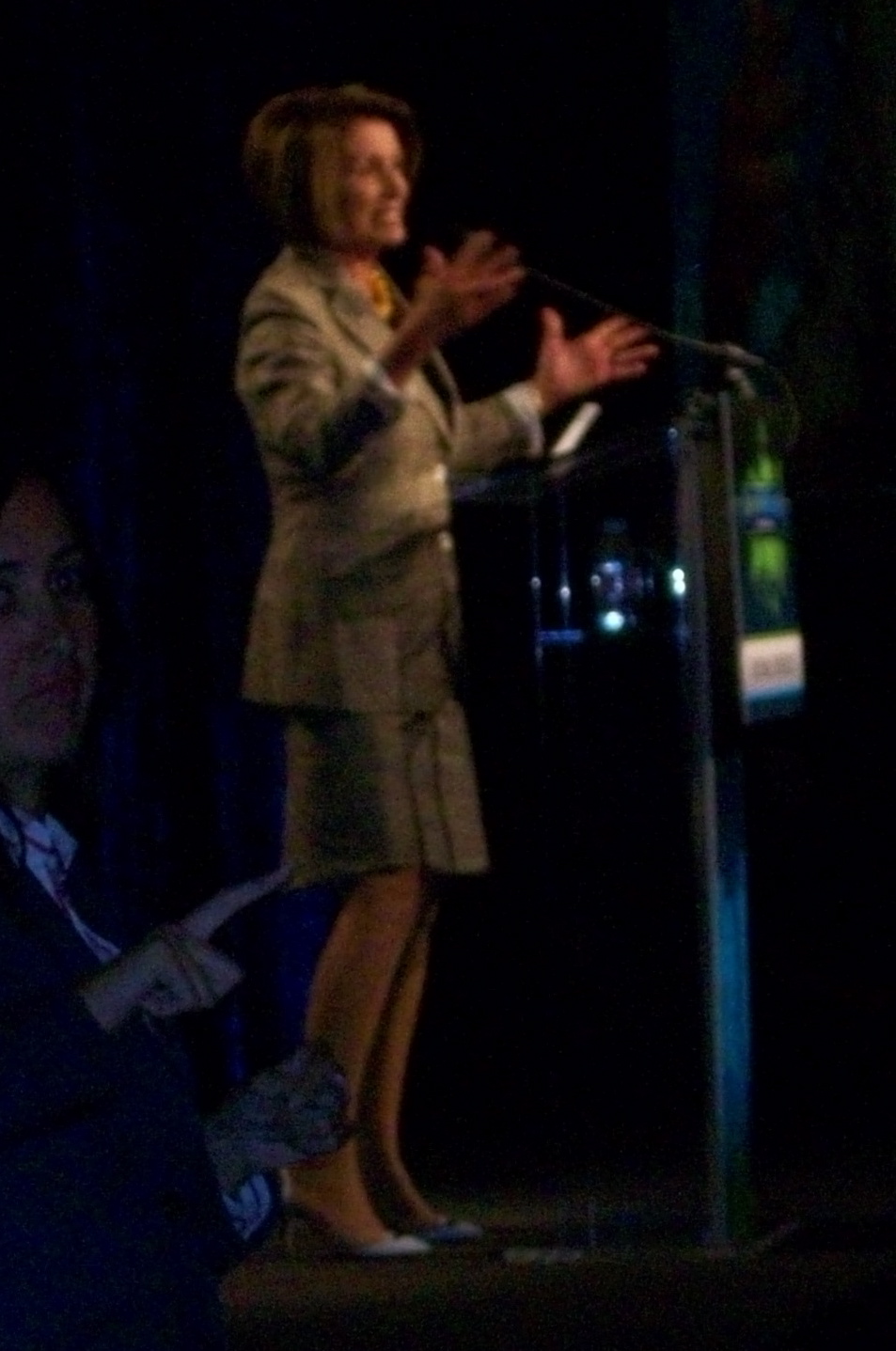
Selected tweets from all three days of the conference are below, but just to prove I was there, here’s a picture of Pelosi speaking:
pelosi

Continue reading “Campus Progress National Conference In Brief”

Fixing Sex Ed Classes

Prince Gomolvilas writes at Bilerico:

The YouthAware program and I began developing OutSpoken, a play that explores the many reasons young people feel ostracized in school, at home, and in their communities. Sure, the piece deals with important issues of race, religion, body type, and socioeconomic background in an intelligent way (in my writing, I refuse to force-feed messages or offer pat resolutions because students can sniff didacticism a mile away), but it also looks at sexuality from several different angles.

I remember when I was younger and unable to swallow pills – they had to be hidden in brownies in order for me to consume them. OutSpoken is sort of like that. We found a way to deal with homophobia without scaring off those who might not have been quite ready to deal with it themselves. And schools that wouldn’t give us the time of day before finally started to let us in.

And guess what happened? Students had been ready and willing to discuss these big issues all along. All it took was administrators and parents to get out of the way.

When my mom asked the health teacher at my high school in conservative southern California why sexual orientation wasn’t covered in our health classes, the teacher told my mom that she would like to address seemingly controversial topics, but that it was too risky for her and for her job. But reading posts like this one in the past few days have really made me aware that it doesn’t have to be that way.

I know that my generation is far more accepting of its LGBT members than previous generations, but that doesn’t mean that homophobia and transphobia aren’t still enormous problems in our schools. Believe me. I’m only a year out of public high school. I know. When health teachers are scared to discuss LGBT issues with their classes, that implicitly sends the message that you should be scared of LGBT people, or that being queer is something to hide. Our teachers should be role models of courage and integrity for their students—not of fear and obfuscation. And they should value and teach to all their students and their needs: in a sex ed classroom that doesn’t teach LGBT topics, not only are straight kids not learning to accept their queer peers and queer kids not being told that it’s okay to be gay or bi or trans, the queer kids aren’t learning that they too have to practice safe sex, or that they can suffer sexual harassment instead of being its assumed cause. No kid is learning that gender is more complicated than a masculine-feminine binary, and that it’s okay if you don’t fit a preconceived notion of masculinity or femininity. That’s something I’m just barely starting to learn and accept, and I’ve been immersed in queer issues for years. Can you imagine what it must be like to be a kid who doesn’t have a support system, and the validity of whose existence is not recognized by the school, the teacher, or the other students? That’s isolating. That’s intimidating. That’s depressing. That’s awful.

Enacting legislation that will help LGBT adults is great—and it’s wonderful beyond belief how much effort the House is pouring into ENDA, domestic partnership benefits, hate crimes, and stuff like that right now. But LGBT teens are at such a high suicide risk, such a high homelessness risk, that it’s frankly unacceptable that programs like Gomolvilas’ aren’t reaching all students. Luckily, one great thing about this issue is it’s easy to localize: you can write your high school or your school district and tell them how much you support including LGBT issues in the sex ed curriculum, and I’m of the opinion that it never hurts to tell your own story.

I’m too tired now (it was a long day at the Campus Progress National Conference!), but in the next few days I’m going to write a letter to my former school board, principal, and health teacher, and tell them what a difference it would have made to me if my school had incorporated LGBT issues into its health curriculum, and that it’s something they should consider for the 2009-2010 school year. You can do the same!

Thoughts on the United States of America’s 233rd Birthday

There is a school of thought in the study of American history—now considered anachronistic and politically incorrect, but quite popular a hundred years ago—called “American exceptionalism.” Its premise is basically that, because of the circumstances of its founding and the ideals of its Founders enshrined in the Declaration of Independence and the Constitution, America is unique. Because America could (depending on how you look at it) be considered the most successful modern democracy, it is somehow special. Worthy of note. Exceptional.

Of course, such an idea fell out of favor later in the 20th century, when historians and everyone else began to talk about the fact that for all that America might have seemed exceptional to white male property owners, it routinely disenfranchised racial minorities, women, the economically disadvantaged, immigrants, LGBT folks, young people, old people, the disabled, and really anyone who didn’t meet the profile of a Founding Father. It’s all very well, historians and civilians realized, to celebrate the ideals to which the Framers of the Constitution aspired, but it is also necessary to be aware that America has been an “exception” in some incredibly awful ways—slavery and its legacy being a prime example, of course. Indeed, one of the incredible things about the system of American government so celebrated by the exceptionalist school of thought is its imperfection. Throughout its two-and-a-quarter centuries (give or take), it has seemingly disenfranchised nearly as much as it has enfranchised.

But despite all this, what is truly incredible about America (and what, I believe, is worth celebrating on this most patriotic of all days) are the voices that come from this tension between America’s ideals and its all-too-frequent failure to live up to them. Sounds of struggle have defined America for as long as it has existed, and while those sounds may include the conventional narrative of battles to win independence from colonialism, or a fight to keep the fragile union together, they are at their strongest when they represent the voices of the oppressed and downtrodden, those Americans who have been relegated to the sidelines, who for whatever reason are not canonized in the elementary school social studies curriculum.

One of the greatest successes of the whole “American ideals” thing is the freedom of expression. This evidences itself not so much in the court battles fought to defend that right on formalized grounds (though those have often been remarkable too), but rather in the general cultural sense that there is no reason why Americans should not use their voices. This has given American history some of my personal cultural heroes, people whose poetry or music or political battles I celebrate despite the fact that they usually are not incorporated into the usual list of American heroes. I am talking, naturally, about Walt Whitman, whose poetry is adulatory of humankind in such an American fashion, and who lived so much as part and parcel of his time, reacting to the turmoil of a young country struggling with slavery and division—you could consider the Civil War the greatest test of those exceptionalist ideals, and throughout it all Whitman’s themes are unity and universality and “the varied carols” of “America singing.” I’m also talking of the folk heroes of the 20th century, such as Woody Guthrie and Pete Seeger, who were reacting to and singing through other great tests of American exceptionalism: the Great Depression and the McCarthy era. Despite impoverishment, despite blacklisting, they sang songs like Guthrie’s “This Land is Your Land,” which aspires to an America “made for you and me,” or his “Pastures of Plenty,” which is written from the perspective of a migrant worker who, despite his disadvantaged life on the outskirts of society, will fight to defend America “with my life if need be/For my pastures of plenty must always be free.” I would be remiss, of course, if I did not mention the incredible vocal tradition of the civil rights movement, which had a dream, which sang “we shall overcome someday.” I would be remiss if I did not mention the Vietnam-era antiwar movement, and students who could not vote until the 26th Amendment was passed in 1970 and who therefore shut down their campuses instead. I would be remiss if I did not mention organized labor’s struggle for living wages and fair treatment, and the fierce sense of unified defiance that came from those battles. There are far too many other struggles to name, so many that my mind is racing with those I have left out.

These heroes of American history—not the usual American exceptionalist heroes who fought the British, pursued Manifest Destiny, defended the sanctity of the union, became captains of industry, and made the world safe for democracy, but heroes all the same—speak to this incredible contradiction between what America has aspired to and what it has been. They speak to the universality of Life, Liberty, and the Pursuit of Happiness in the American psyche, and the fact that, whatever our situations in life (and in this country, they certainly do vary greatly), we have learned and been taught that we have the right to aspire to something greater. We continue to do this, as Americans, on a daily basis, whether it’s in our personal struggles to give our children better lives than we had; or in politics, when we make choices at the polls or when we march in the streets in celebration or protest. Throughout it all, the culture permeates, and our art and our music and our literature and our film and our commerce and our daily lives reflect the constant fight to make sense of the dichotomy of promise versus practice, to understand what we are to do with the ideals Thomas Jefferson and a few other overeducated middle-aged white men with land and slaves entrusted to us.

I largely passed today by not observing the Fourth of July, which didn’t seem strange to me: the day is essentially an arbitrary one on which to wave a flag, and as someone who grew up in the wake of September 11, flag-waving has been pretty much spoiled for me. I have spent too much of my life being told that I am a traitor for not reciting the Pledge of Allegiance with my class, or for questioning the justness of the Vietnam War, or for vocally opposing the Christian rhetoric of “In God We Trust” and “one nation under God” to feel any differently now. But at the end of a long and delightful normal Saturday, I went up to my friend’s roof to watch the DC fireworks explode over the Washington Monument, the first time in many years that I’d seen a fireworks display, and as I watched I couldn’t help feeling a frisson of excitement. Today is as good a day as any to say that I exult in the cultural legacy of enduring and irreconcilable contradiction, the exceptionalism of ideals that are nearly impossible to achieve, though not for lack of trying and trying and trying again.

I am seeking a conclusion to this pattern of troubled perseverance with which I can end this essay, and of course my favorite American to quote provides one by moving us forward in the ongoing struggle. At the end of a 1956 poem about his relationship to his country, he writes, “America, I’m putting my queer shoulder to the wheel.” That’s always struck me, at least, to be as good a plan as any.
Allen Ginsberg and AIDS

Or, the sorts of nerdy obsessions that keep me up at 1 in the morning.

In all of the published poetry Allen Ginsberg wrote between 1978 and 1990, he mentions AIDS only twice. His poetry is weirdly free of the constant allusions to the disease that appear in the work of any gay male writer living in New York in the ’80s, as Ginsberg did. In addition, if his poetry (which is invariably autobiographical) and his journals are any indication, he remained sexually active throughout the period, which boggles the mind somewhat. How did he manage not to die of AIDS (he died of liver cancer in 1997), much less ignore the phenomenon as his friends and fellow writers and neighbors in the East Village died around him?

The first time Ginsberg mentions AIDS, it is in a poem called “Sphincter,” dated March 15, 1986 (very much after the disease’s initial terrifying outbreak). Here, the reference is an entirely self-serving one; Ginsberg stresses that his “good old asshole” must now, due to AIDS, only admit “the condom’d orgasmic friend.” Usually a faithful commentator on current events, here he has managed to go seven years without a peep about the thousands of deaths in his microcosm and now his only remark is that AIDS necessitates that he practice safe sex? This isn’t the poet I’m used to.

The second reference to the syndrome in question comes two years later (February 13, 1988), and the poem is called “Grandma Earth’s Song.” Ginsberg talks about how he encounters a crazy homeless woman who then chants in rhyming couplets a crazy homeless chant about what an awful state the world is in. Many of the observations “Grandma Earth” makes are the ones we’re used to hearing about the Reagan years—the chant references the conflict between the Israelis and the Palestinians and violence in the Middle East in general, the state of the economy, quite a lot about the state of the environment, and—in one little offhand reference—AIDS. It’s an interesting commentary on the world of 1988, and the gay literary/cultural world in particular. What little exposure I’ve had to the gay literature and popular culture of the period suggests that the gay male community was completely traumatized by AIDS, shut down to the point that it couldn’t think of anything else. And yet Ginsberg, in his treatment of AIDS, chooses to put the concern expressed in a lot of very high-minded literary endeavors into a crazy woman’s ravings—the sentiment couldn’t be farther removed from that of, for example, Angels in America. And yet, if Ginsberg’s intention is to suggest how paranoid all such fears seem—fears about violence and war, money, even the ozone layer and an epidemic—the attitude towards AIDS does make sense, albeit seem a bit of a strange way of confronting such a huge and omnipresent issue in Ginsberg’s world.

I suppose that Ginsberg was never so much a figure of gay liberation; he never placed himself within a thoroughly gay world, the way a great many other 20th-century gay writers did. Perhaps this was a result of his early repression and self-loathing, perhaps it had something to do with the fact that the men he lusted after and fell in love with were invariably heterosexual (Jack Kerouac, Neal Cassady, and even to an arguable degree Peter Orlovsky), or perhaps it was more to do with the fact that Ginsberg’s Buddhist sensibilities suggested the bridging of subcultural boundaries and the oneness of humanity, just as they did two decades before when he was an avenue of communication between Berkeley student protestors and the adults trying to combat them. And so it seems reasonable that he wouldn’t have seen himself as a spokesperson for the gay trauma in a way that many of his contemporaries did, and that his struggles would have been more cerebral or spiritual and not a question of the daily fight for survival that seems to have characterized much of the rest of the gay community in the ’80s.

There is a poem from March 1990, “Numbers in U.S. File Cabinet (Death Waits to Be Executed),” in which Ginsberg does a sort of by-the-numbers of problems in the world: things like “100,000 alcohol deaths yearly,” “$100,000,000,000 to 200,000,000,000 estimate nuclear weapons complex cleanup costs,” “3,000 citizens disappeared in Government custody Peru 1972-1979.” But whereas my reading suggests that any number of gay writers would have placed (and still place) the thousands of gay men lost to AIDS quite prominently in that list, there is no mention of these deaths in the catalog of what is wrong with the world.

On some level I believe that the always-self-centered poet really just wasn’t interested in the personal struggles of other people; AIDS lacks the high-minded idealism of the radical student movements or even the nascence of the Beat Generation, and I imagine there was less to interest Ginsberg there, particularly in his later years, when he seemed primarily occupied in summoning up the spirits of the friends of his youth or of his poetic influences (usually Blake and Whitman, his particular favorites). Practically, it’s incredible that Ginsberg didn’t contract AIDS himself, and wildly implausible that he wouldn’t have had at least one lover or close friend who died of it—even if he had stayed at Naropa in Boulder or abroad for all of the ’80s, which is not at all the case, as I know that was living in the East Village for at least some of that time, he couldn’t have avoided the reach of AIDS.

But I suppose that, here, Ginsberg provides some much-needed perspective. After immersing myself for quite a while in writers to whom AIDS is critical and life-changing and traumatizing and galvanizing, it’s a reality check to note that it was not quite so central to every literary figure in America, or indeed every gay literary figure. And perhaps that was the point; Ginsberg always stood out, and perhaps he wanted to be the one gay poet in the ’80s who wasn’t writing about AIDS. I guess that if that were the case, I couldn’t really blame him.